How to Ensure Remote Staff Accountability Without Micromanagement
Remote teams don’t fail due to distance — they fail due to lack of structure. Discover how defined KPIs, sprint frameworks, transparent reporting, and trust-driven leadership ensure accountability without micromanagement, turning remote staffing into a scalable performance advantage.
Remote and outsourced teams are no longer experimental - they are a strategic reality. Today, nearly 30% of the people are working remotely in the US. The shift is clear. The hesitation, however, remains.
The primary concern is rarely cost or access to talent. It’s control.
Will quality drop?
Will timelines slip?
Will accountability fade?
The answer depends entirely on the system behind the team.
At Make My Brand, our Staff-as-a-Service model is designed around this principle. Every engagement includes built-in oversight, performance visibility, and structured collaboration processes. Accountability is not reactive - it is engineered into the workflow from day one.
In this blog, we break down the processes that transform remote staffing from a perceived risk into a scalable, accountable growth model.
Laying the Groundwork: Rigorous Onboarding and Training
High-performing remote teams are not assembled overnight - they are carefully curated. Leading outsourcing partners rely on pre-vetted specialists, structured onboarding systems, and continuous capability development to ensure performance consistency from day one.
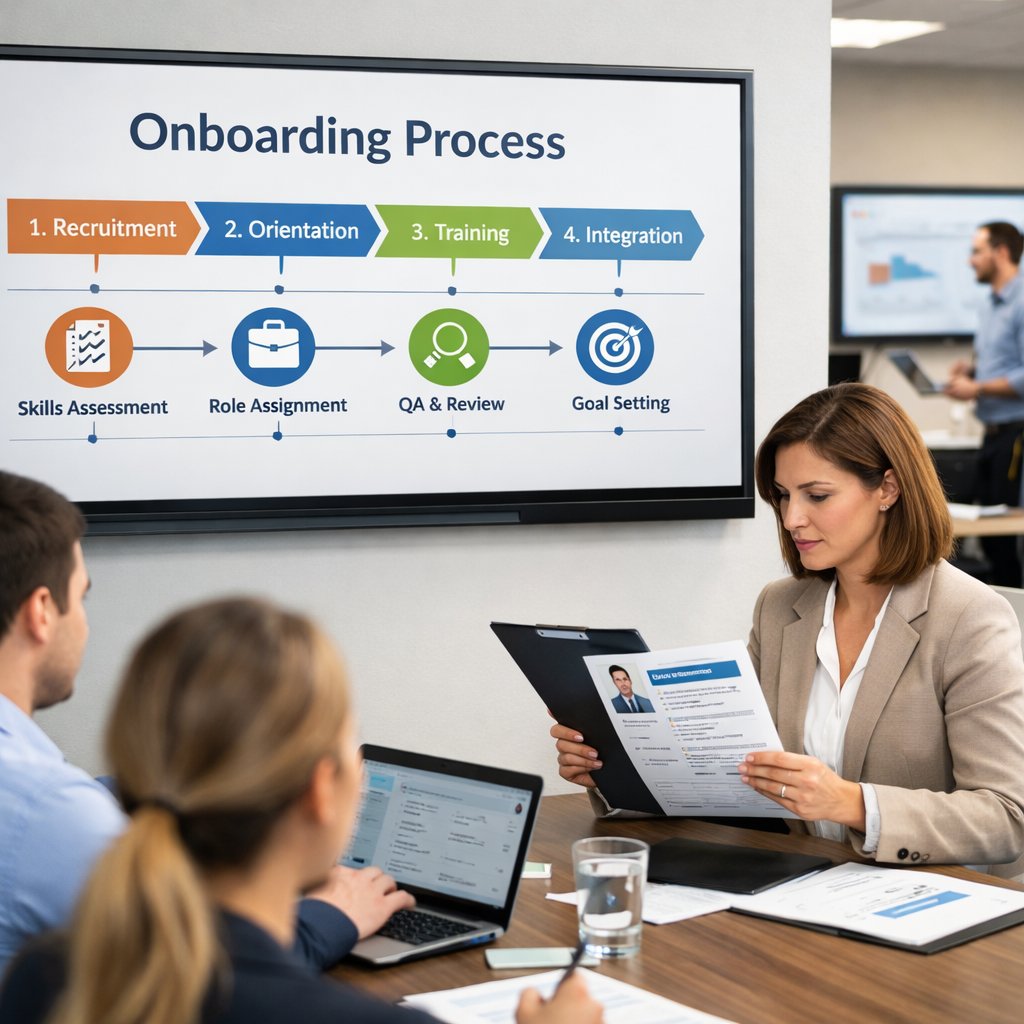
Strong remote staff accountability starts with three non-negotiables:
Precision Hiring
Only specialists with proven expertise, portfolio validation, and domain experience are onboarded. Skill-based hiring eliminates guesswork and reduces delivery risk.
Structured Role Alignment
Every team member operates with a clearly defined mandate — responsibilities, KPIs, timelines, and success benchmarks are mapped before execution begins.
Standardized Quality Controls
This is where quality assurance outsourcing plays a critical role. Structured QA protocols include:
Formal code reviews
Multi-stage design approvals
Performance testing procedures
Certification validation before deployment
These systems prevent errors before they surface.
Ongoing education is equally essential. Remote professionals must continuously refine skills, stay aligned with evolving tools, and adapt to brand-specific expectations. Without reinforcement, quality becomes inconsistent.
At Make My Brand, cross-functional pods are deployed with full orientation to a client’s brand guidelines, performance goals, and delivery standards. Accountability is not implied - it is documented, measured, and optimized.
The result is simple: when talent selection is rigorous and training is structured, quality becomes predictable rather than dependent on oversight.
Operational Clarity: Aligning Metrics with Business Impact
Distance does not reduce accountability - ambiguity does.
When teams operate remotely, clarity becomes the most powerful management tool. Without defined outcomes, even the most skilled professionals can drift. With structure, performance becomes measurable and predictable.
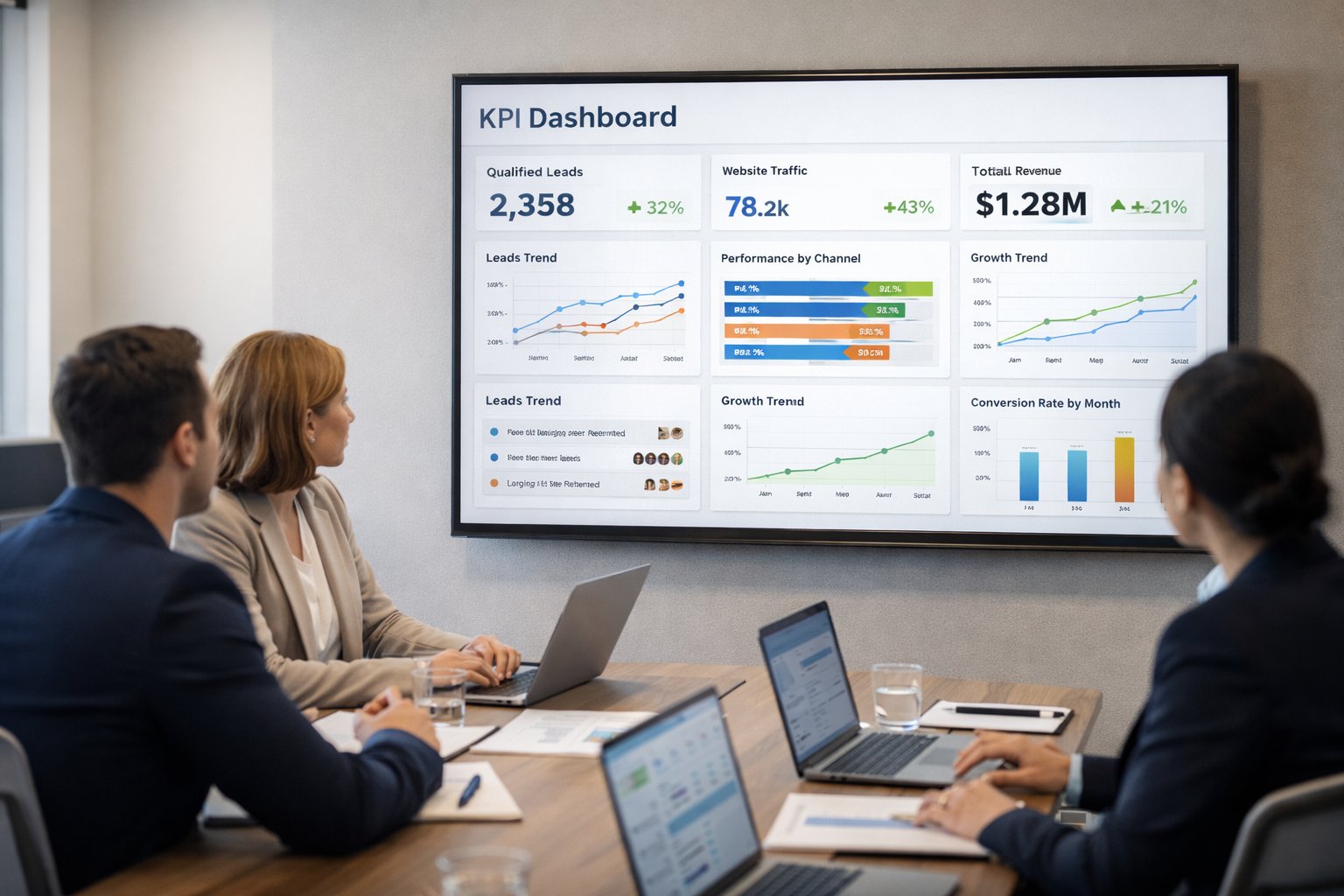
Strong remote staff accountability is built on following three pillars:
Defined Outcomes, Not Vague Expectations
“Improve marketing” is not a strategy. “Increase qualified leads by 30% in 90 days” is.
Every engagement should begin with:
Clearly outlined deliverables
Time-bound milestones
Pre-defined KPIs
Agreed success benchmarks
SMART goals eliminate interpretation gaps and align execution with business priorities.
Sprint-Based Execution Frameworks
High-performing remote teams operate in structured cycles - not open-ended timelines. Leading organizations implement:
Weekly stand-ups
Biweekly review sessions
Sprint demos
Monthly performance presentations
In our models at Make My Brand, this rhythm ensured continuous alignment, rapid feedback loops, and zero surprises at delivery stage.
Data-Backed Visibility
Accountability should be observable - not assumed. Dashboards that track:
Project milestones
Productivity metrics
Delivery timelines
Conversion or performance indicators
create transparency without micromanagement.
The focus shifts from monitoring hours to measuring outcomes. Teams are evaluated based on impact, efficiency, and results - not screen time.
When tools and strategy work together, performance improves systematically. Clear metrics transform remote operations from a perceived risk into a controlled, scalable growth engine.
Transparent Reporting and Staff Monitoring
Uncertainty creates hesitation. Visibility eliminates it.
When operations move beyond office walls, the natural concern is loss of control. The solution is not surveillance - it is structured transparency.
High-performing organizations treat staff monitoring as a performance optimization tool, not a control mechanism. The objective is simple: ensure progress is measurable, roadblocks are identified early, and delivery remains predictable.
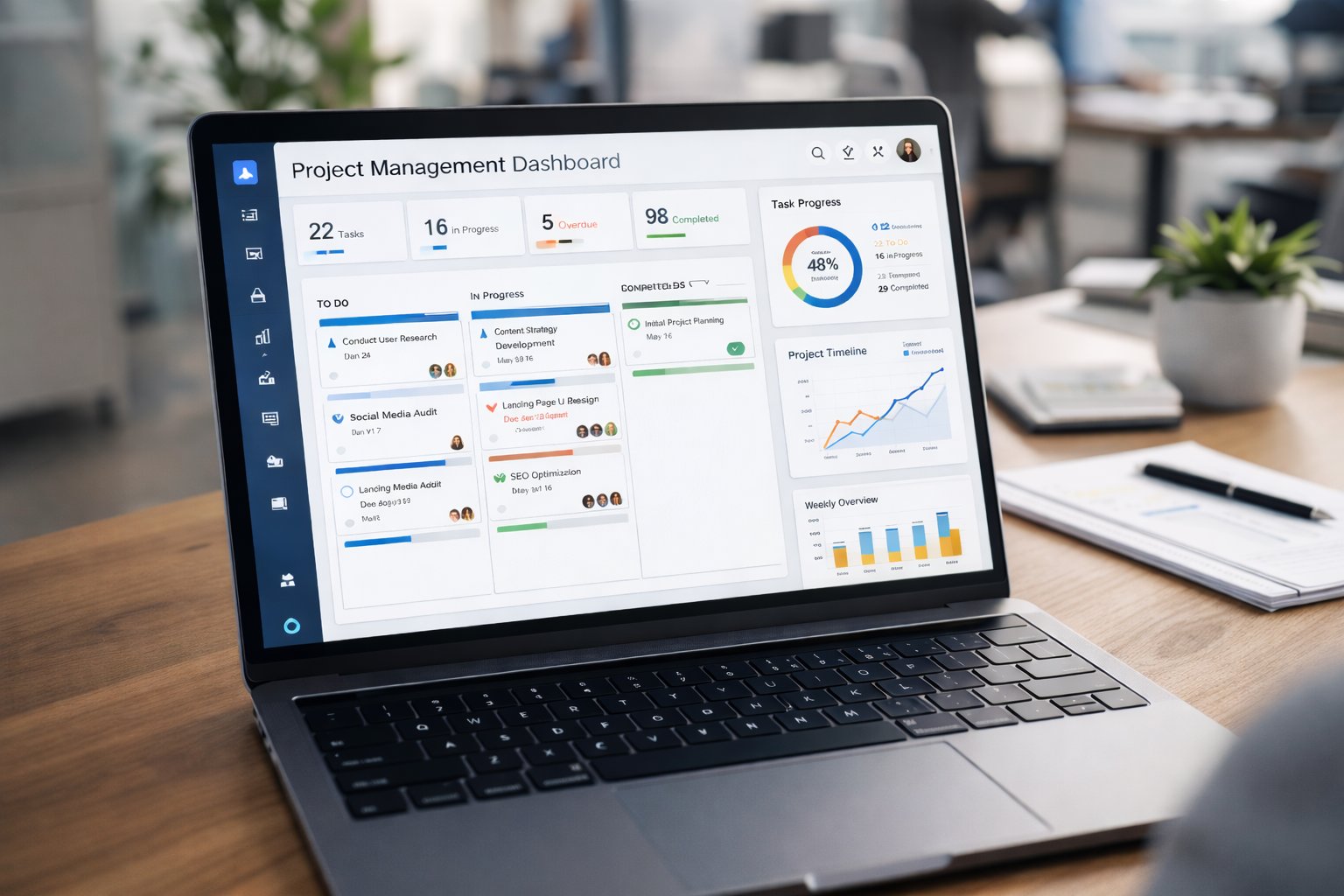
What Transparent Oversight Looks Like?
Modern remote ecosystems typically include:
Time-tracking systems to log productive hours
Activity tracking for workflow visibility
Task-based dashboards showing assignment status
Milestone-based performance reviews
The intent is not micromanagement. It is operational clarity.
Similarly, project management platforms such as Asana and Jira allow stakeholders to monitor deliverables, deadlines, and workflow progress in real time. Every task is visible. Every delay is traceable. Every milestone is documented.
Structured Reporting as a Standard
At Make My Brand, transparency is engineered into the engagement model. Within our Staff-as-a-Service for businesses, clients receive:
Detailed status updates
Performance analytics
Delivery tracking reports
Documented hours and output summaries
Remote staff accountability becomes measurable - not assumed. Regular communication rhythms combined with data-backed reporting significantly reduce performance gaps.
Each engagement operates under documented reporting cadences, ensuring accountability mirrors - and often exceeds - in-house standards. The goal of staff monitoring is simple:
Identify risks early.
Resolve bottlenecks quickly.
Maintain performance consistency.
When systems are transparent and communication is disciplined, remote teams do not drift. They deliver - with clarity, confidence, and measurable results.
Fostering Trust and Communication
Systems create structure. Trust drives performance.
Remote staff accountability is not sustained by tools alone - it is reinforced by culture. When professionals feel trusted, aligned, and empowered, performance naturally improves.
Autonomy with Defined Responsibility
Research consistently shows that when leadership demonstrates trust in team autonomy, motivation and accountability rise significantly. Clear expectations combined with ownership create a powerful dynamic: individuals take responsibility not because they are monitored, but because they are aligned.
At Make My Brand, remote specialists are given full ownership of execution - paired with clearly documented deliverables and measurable outcomes. Freedom operates within the structure. That balance is critical.
Communication as an Operating Rhythm
Distance can create silos unless communication is intentional. High-performing remote teams establish predictable touchpoints, such as:
Daily or weekly stand-ups
Structured sprint reviews
Open collaboration channels
Monthly consistent check-ins
These rhythms ensure alignment remains continuous rather than corrective.
Cultural integration also plays a decisive role. Cross-border teams are coached on brand identity, communication tone, and strategic priorities, so they function as embedded partners - not external contributors.
Engagement Translates to Output
Engagement is not a soft metric - it is a performance driver. A recent study highlighted that 78% of remote employees report high engagement levels, compared to 72% of in-office employees. Higher engagement correlates directly with quality, ownership, and consistency.
Productivity data reinforces this trend. Remote professionals have demonstrated an average productivity increase of approximately 13%, accelerating time-to-market in the process.
These advantages, however, only materialize when accountability is built into the model.
When trust is supported by measurable expectations and structured oversight, remote staff accountability shifts from being a concern to becoming a competitive advantage. At that point, remote operations are no longer about cost efficiency - they become a strategic performance multiplier.
Conclusion: Building Trust Through Process
Quality is not a coincidence. Accountability is not a personality trait.
Both are engineered.
Sustainable remote staff accountability is built through deliberate systems - not assumptions. When structured correctly, remote teams operate with clarity, precision, and measurable impact. The differentiator is not whether remote teams are used, but how they are managed.
At Make My Brand, oversight is embedded at every level - from pre-vetted onboarding to sprint-based execution and performance reporting. Each engagement is designed to ensure visibility, alignment, and results. Deliverables are documented. Milestones are tracked. The impact is measurable. When processes are strong, distance becomes irrelevant.
The question is no longer whether remote teams can deliver. It is whether they are supported by the right framework.
Connect with Make My Brand today to discuss how a structured Staff-as-a-Service model can strengthen performance, improve oversight, and scale execution with confidence.
Loading FAQs
Please wait while we fetch the questions...
Published on February 26, 2026 by Khushpreet Kaur