How Sustainable Branding Elevates Brand Positioning
Sustainable branding strengthens brand positioning by embedding purpose into strategy, identity, and operations. When responsibility aligns with measurable action, brands gain credibility, customer trust, and differentiate beyond price creating premium perception and long-term competitive advantage.
Markets evolve. Expectations evolve faster.
Today, brands are not evaluated solely on product quality or pricing - they are assessed on purpose, responsibility, and long-term impact. This shift has transformed sustainable branding from a corporate initiative into a strategic advantage.
For modern enterprises, sustainable branding is no longer optional - it is strategic infrastructure, forming the foundation of a strong sustainable strategy.
Companies that embed sustainability into their foundations consistently achieve stronger perception, deeper trust, and premium positioning. Not because they claim to be better - but because they demonstrate long-term thinking.
Premium is no longer about exclusivity. It is about credibility.
At Make My Brand, we view sustainability as a structural advantage - one that, when executed with clarity and precision, elevates market authority and pricing power.
In this blog, we demonstrate how sustainable branding functions as a strategic growth lever - strengthening differentiation, increasing pricing power, and reinforcing long-term brand equity.
Sustainability Is a Value Signal, Not a Trend
Embedding sustainability brand strategy is no longer a symbolic gesture - it is a value driver. It means aligning core purpose, messaging, and operations with environmental and social values. When done authentically, this strengthens brand equity.
Even amid global cost-of-living pressures, sustainability continues to influence purchasing decisions. Recent research shows that consumers are willing to pay an average premium of 9.7% for products that are sustainably produced or responsibly sourced. This means an eco-focused brand positioning directly translates into higher perceived value.
Premium brands share three common traits:
They communicate a long-term commitment
They demonstrate accountability
They align messaging with measurable action
Sustainability reinforces all three.
A company that prioritizes ethical sourcing, transparent supply chains, and responsible production automatically elevates perceived quality. Responsibility suggests durability. Durability suggests reliability. Reliability commands a premium.
The Strategic Link Between Sustainability and Brand Positioning
Sustainability becomes powerful when it is embedded into Brand Strategy, not appended to campaigns.
When aligned with business goals, it influences:
Market differentiation
Competitive defensibility
Customer loyalty
Long-term brand equity
Strong brand positioning today is rarely product-driven alone. It is purpose-driven. Companies that clearly articulate why they exist - beyond profit - create emotional equity. That emotional equity is difficult to replicate.
Sustainability also reframes value conversations. Instead of competing on price, brands compete on principles. Instead of short-term promotions, they build long-term credibility.
Sustainable branding strengthens brand positioning by embedding purpose into competitive differentiation.
And credibility is a premium asset.
Building a Sustainable Brand Identity for Premium Positioning
A premium brand is not defined by price alone - it is defined by perception. And perception is shaped by brand identity.
When sustainability is embedded into visual systems, messaging frameworks, and customer experience design, it becomes tangible. It shows up in:

Visual systems and color language
Messaging frameworks
Packaging design
Website experience
Tone of voice
Partnerships and collaborations
When these elements consistently reflect environmental and social commitments, sustainability stops being a claim and starts becoming credibility. When audiences see proof behind positioning, perceived quality increases. The brand is no longer competing solely on features - it competes on principles.
A sustainable brand identity becomes powerful when supported by measurable action:
Carbon-neutral or low-impact production
Ethical sourcing and supply chain transparency
Recyclable or minimal packaging
Community-led initiatives
Brands that align actions with aesthetics earn deeper trust, which is the foundation of premium pricing. A sustainable identity is powerful because it reflects operational truth - not marketing fiction.
Global Brands That Elevated Through Sustainability
Some of the world’s most respected brands have embedded sustainability into their DNA, reinforcing premium perception.
Patagonia positioned environmental activism at the core of its business model, strengthening loyalty and long-term brand equity.
Unilever integrated sustainability commitments across its portfolio, influencing packaging innovation and product development.
Procter & Gamble aligned brands like Tide with responsible manufacturing practices to enhance modern relevance.
These organizations did not treat sustainability as a seasonal message. They embedded it into strategy, operations, and storytelling.
The result: elevated brand positioning supported by measurable enterprise-scale sustainability commitments.
Moreover, the Sustainable Market Share Index™ reported that products marketed as sustainable were responsible for 41% of the growth in consumer-packaged goods (CPGs), with market share continuing to rise year over year.
This statistic underscores a powerful reality: sustainability is not a niche preference - it is a primary growth engine within modern markets.
Why Sustainability Justifies Premium Pricing?
Premium positioning is rooted in perception. When a brand demonstrates:
Ethical sourcing
Transparent supply chains
Reduced environmental impact
Community engagement
Long-term accountability
It signals quality beyond the product itself. Consumers increasingly associate responsibility with reliability. They are more confident investing in brands that think long-term. Sustainability reduces reputational risk, enhances credibility, and strengthens trust.
And trust is the foundation of sustainable premium brand positioning.
From Responsibility to Revenue
Sustainable brands benefit in ways that extend beyond perception:
Greater customer retention
Stronger advocacy and word-of-mouth
Increased resilience during market shifts
Higher brand recall
Improved employer attractiveness
Sustainable branding aligns commercial ambition with social responsibility- a balance that modern markets increasingly reward with loyalty and pricing flexibility.
More importantly, it protects brand value over time. Companies that ignore sustainability risk appear outdated or misaligned with evolving expectations. Future-focused brands understand that long-term equity depends on responsible growth.
Strategic Execution: The Make My Brand Approach
Turning sustainability branding into premium market authority requires more than intention - it requires structured execution.
At Make My Brand, sustainability is not treated as a surface-level message. It is embedded into positioning architecture, visual systems, and long-term growth strategy. The focus is on building cohesive brand ecosystems where purpose and performance reinforce each other.
Embedding Sustainability Into Brand DNA
Premium positioning emerges when sustainability is:
Integrated into brand purpose
Reflected across visual and verbal identity systems
Reinforced through transparent communication
Supported by operational credibility
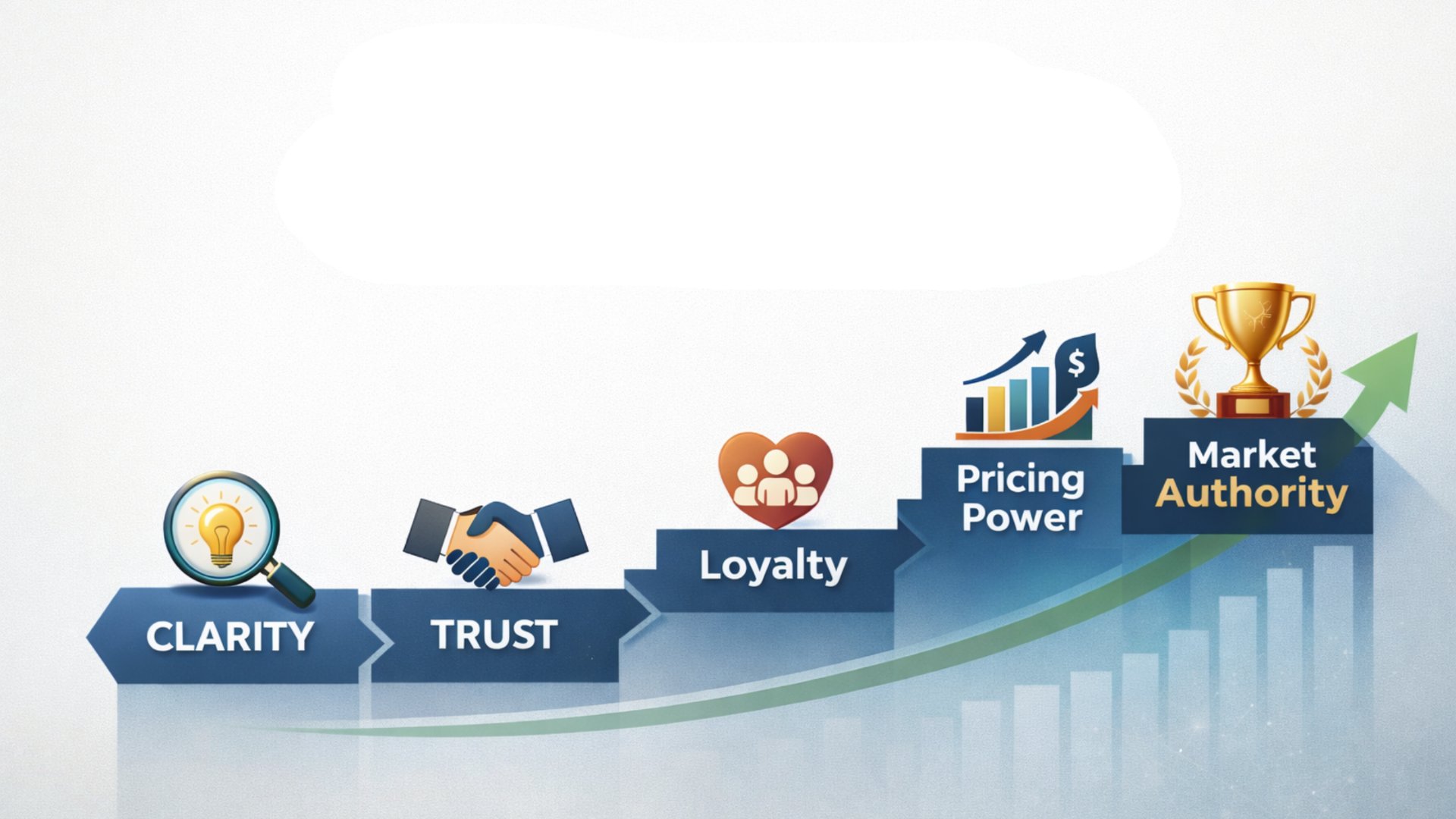
This alignment creates a self-reinforcing cycle:
Clarity → Trust → Loyalty → Pricing Power → Market Authority
As AI-driven search engines increasingly prioritize meaningful, value-rich narratives, brands with authentic sustainability commitments are gaining stronger digital organic visibility. Search ecosystems now reward depth, credibility, and structured brand storytelling - making strategic clarity even more critical.
Sustainable branding is a strategic lever for:
Stronger differentiation
Premium market perception
Long-term brand equity growth
Resilient competitive positioning
When executed correctly, it transforms an organization from a product provider into a values-driven category leader.
For companies looking to elevate their market standing, the opportunity lies in deliberate integration - where purpose, design, messaging, and experience align seamlessly.
Conclusion: Sustainability as a Premium Growth Engine
Sustainable Branding has evolved from a reputational advantage to a decisive market differentiator. It influences purchasing behavior, strengthens loyalty, justifies premium pricing, and builds long-term brand equity.
Data continues to confirm that customers reward responsible brands with loyalty and a willingness to pay more. Premium positioning, therefore, becomes a natural outcome - not a forced perception. Translating sustainability into market authority requires structured brand thinking, cohesive identity systems, and consistent messaging across every touchpoint.
At Make My Brand, the focus remains on helping companies translate sustainability into strategic clarity and competitive authority. Because in an increasingly conscious economy, standing for something meaningful is the foundation of premium brand positioning.
Connect with Make My Brand to explore how sustainability can become your strongest premium differentiator.
Loading FAQs
Please wait while we fetch the questions...
Published on March 2, 2026 by Surbhi Sood