Flexible Staffing Solutions: Building a Scalable Workforce Without Compromising Quality
Flexible staffing helps businesses scale faster without sacrificing quality. By integrating on-demand specialists with structured processes and clear governance, organizations can bridge skill gaps, control costs, and maintain consistent performance while adapting to changing demands..
Growth today requires agility. Project timelines compress, workloads fluctuate, and specialized skills are needed at a moment’s notice. Fixed teams alone can slow execution, increase costs, and limit innovation.
Flexible staffing solutions offer a strategic way to navigate this uncertainty. By integrating specialized talent on demand, organizations can:
Respond faster to changing priorities
Optimize resources efficiently
Maintain consistent quality across every project
This approach turns workforce planning into a growth enabler rather than a constraint.
At Make My Brand, we’ve seen how dynamic teams, when structured and managed well, outperform rigid setups - delivering measurable results while maintaining consistency.
Here, in this blog, we will explore how strategic, flexible staffing can bridge skill gaps, accelerate projects, and drive growth without ever compromising quality.
Why Flexibility Matters?
Growth rarely follows a straight line. Workloads fluctuate, timelines compress, and specialized skills are often required at short notice. Relying solely on a fixed workforce can quickly create bottlenecks - slowing execution and inflating costs. This is where flexible staffing becomes a strategic advantage rather than a reactive measure.
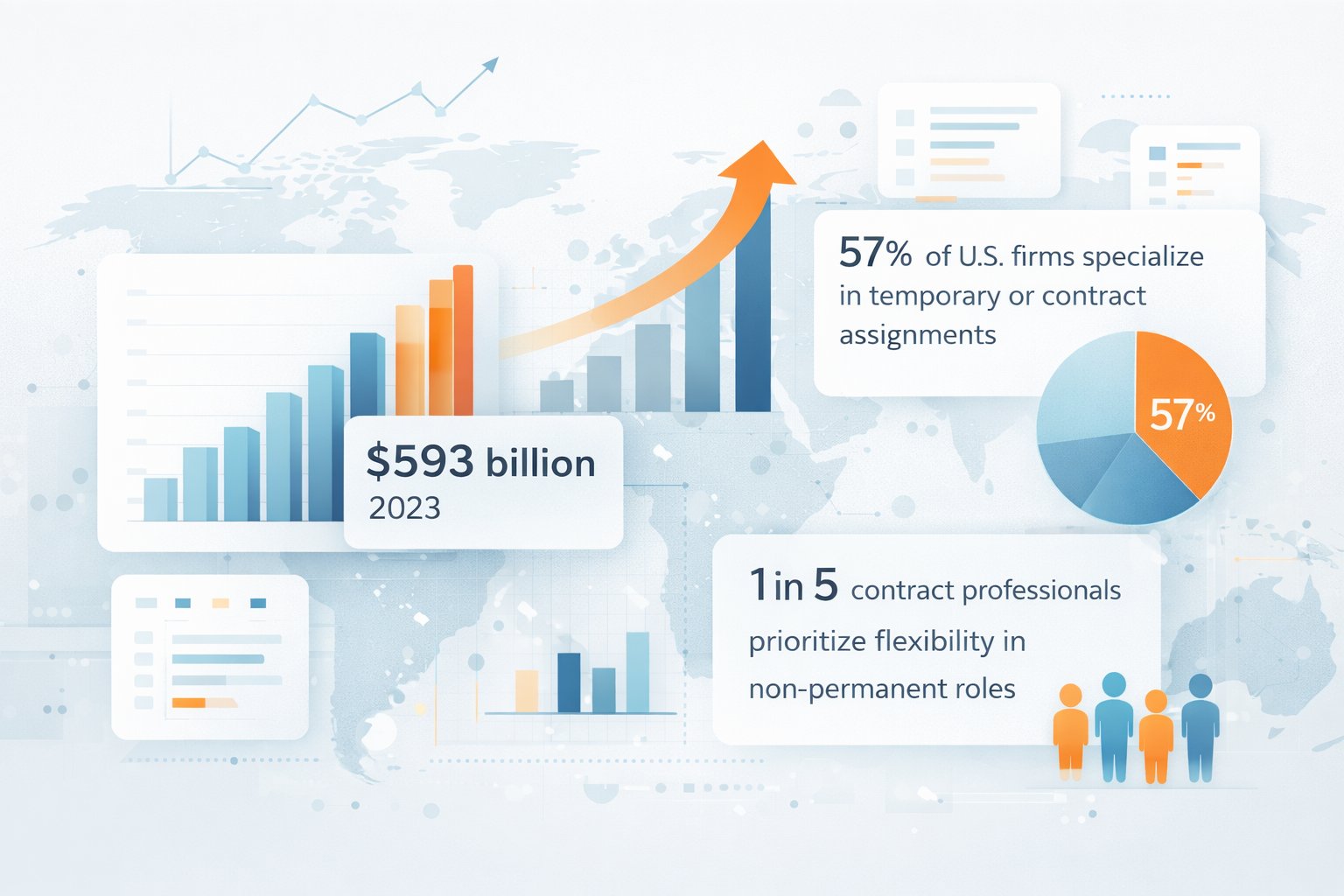
Recent industry data underscores how deeply this shift is embedded in modern workforce planning:
$593 billion — the global staffing industry valuation in 2023, reflecting widespread adoption of flexible talent models.
57% of U.S. firms now specialize in temporary or contract assignments, highlighting strong demand for on-demand expertise.
1 in 5 contract professionals cite flexibility as the primary reason for choosing non-permanent roles, signaling a growing, motivated talent pool.
From an operational standpoint, flexible staffing solutions allow organizations to scale talent precisely when and where it’s needed.
A specialist developer can be onboarded for a product sprint, a designer for a rebrand, or a performance marketer for a launch cycle - without long recruitment timelines or permanent overheads. Once objectives are met, teams can recalibrate just as efficiently.
Implementing Staff Augmentation Models
One of the most effective ways to introduce flexibility into a growing organization is through staff augmentation models - the strategic integration of external specialists into internal teams for defined roles or timeframes. Instead of committing to permanent hires, businesses can “plug in” vetted experts precisely when specific skills or capacity are required.
This approach is particularly effective in two scenarios:
Skill gaps: Bringing in a QA engineer for a critical product launch or a data analyst for a short-term reporting initiative.
Capacity surges: Adding designers during a rebranding phase or developers during a feature-heavy release cycle.
The advantages are immediate and measurable:
Faster ramp-up: Specialists are onboarded in days, not weeks, eliminating prolonged recruitment cycles.
Cost efficiency: Resources are engaged only for the duration they add value, avoiding long-term payroll and benefit commitments.
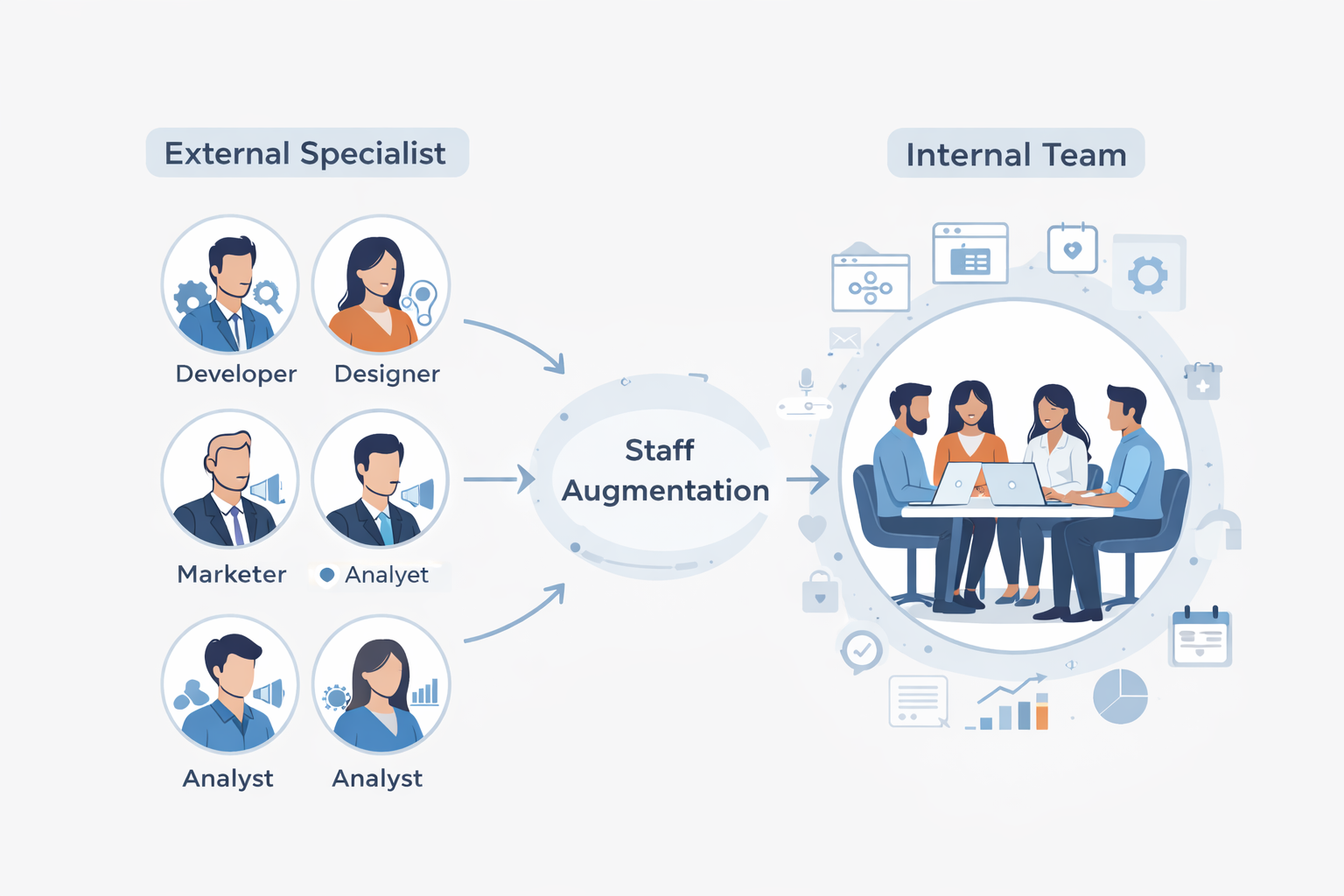
In practical terms, augmentation turns workforce planning into a control system - capacity can be increased or reduced with precision rather than fixed commitments. Many technology-led organizations already operate this way, assembling onsite and offshore delivery pods that collaborate across time zones to maintain continuous momentum.
This model delivers value well beyond the technology sector. A real estate organization working with Make My Brand adopted a Growth-as-a-Service pod that blended in-house teams with external specialists. The result was a 584% increase in campaign conversions, driven by faster execution, sharper specialization, and tighter alignment between strategy and delivery.
Structure Is the Quality Anchor
Flexibility without structure reduces consistency. Effective augmented teams operate within clearly defined frameworks:
Role clarity: Responsibilities, ownership, and success metrics established from day one.
Process alignment: External specialists follow the same workflows, quality standards, and documentation practices as internal teams.
Unified toolsets: Shared project management platforms, code repositories, design systems, and reporting dashboards.
Cloud-based collaboration tools, real-time performance dashboards, and scheduled video stand-ups play a critical role in maintaining alignment.
A consistent communication rhythm - weekly progress reviews, sprint demos, and outcome reporting - ensures transparency and minimizes execution gaps.
Collaboration Without Borders
Remote and hybrid collaboration is now standard. When teams use consistent communication tools, documentation systems, and planning processes, location does not affect output quality. A designer in one region and an analyst in another can operate as a single unit when workflows are standardized.
At Make My Brand, we use structured Slack channels, shared documentation environments, and collaborative planning tools to remove the friction often associated with the outsourcing vs in-house teams decision. The result is faster execution, stronger cohesion, and consistent delivery of quality - regardless of where talent is located.
Ensuring Quality in a Dynamic Team
Scaling quickly is not an excuse for slipping standards. Every company must build quality control into its flexible staffing strategy. Best practices include:
Rigorous Selection & Onboarding
Screen contractors thoroughly (portfolio reviews, technical tests, reference checks) just as you would full-time hires. Onboard them with the same orientation and brand guidelines, so they understand your quality expectations.
Clear Deliverables & Processes
Define objectives, timelines, and acceptance criteria up front. Use detailed briefs and templates so that temporary staff produce output on par with permanent teams.
Performance Metrics
Track KPIs (e.g., code quality, project milestones, campaign metrics) for all team members. Use real-time analytics to catch issues early. For example, Make My Brand sets up shared dashboards (e.g., Looker Studio/GA4) so clients and teams can monitor performance together.
Regular Communication
Maintain open lines. Even with remote experts, schedule frequent check-ins. This social glue prevents misunderstandings and keeps everyone aligned on goals.
Cultural Integration
Include temporary members in team calls, trainings, and feedback loops. A sense of belonging often correlates with higher commitment to quality. Treat them as “insiders” during their engagement.
By applying disciplined governance and clear operating standards, organizations avoid the typical risks like fragmentation, inconsistent output, and weak accountability.
Real-world example:
Make My Brand has applied this approach in practice. In a partnership with a U.S.-based Elder Law firm, a dedicated growth pod was embedded directly into day-to-day operations. The team owned both strategy and execution, operating as an extension of the internal workforce. Within a few months, the engagement delivered:
186% growth in active users
30% increase in average website engagement time
The outcome demonstrates that flexible teams, when managed with discipline, can scale performance significantly without diluting brand standards or content quality.
Read the full case study here.
The Make My Brand Advantage
Flexible staffing is a powerful strategy for growth, but its success hinges on expert implementation. Make My Brand acts as a growth enabler for scale-ups by combining flexible team models with proven execution frameworks.
Each engagement is designed to scale with demand. Through Staff-as-a-Service and Growth-as-a-Service pods, teams expand when workload increases and contract when objectives are met - without disrupting momentum or outcomes. Resources are aligned to priorities, not headcounts.
Consistent Quality at Every Scale
Businesses don’t have to choose between agility and excellence. Every specialist - designer, developer, or analyst - meets the same quality bar as any permanent hire. Processes, review cycles, and performance benchmarks remain consistent regardless of engagement length or team size.
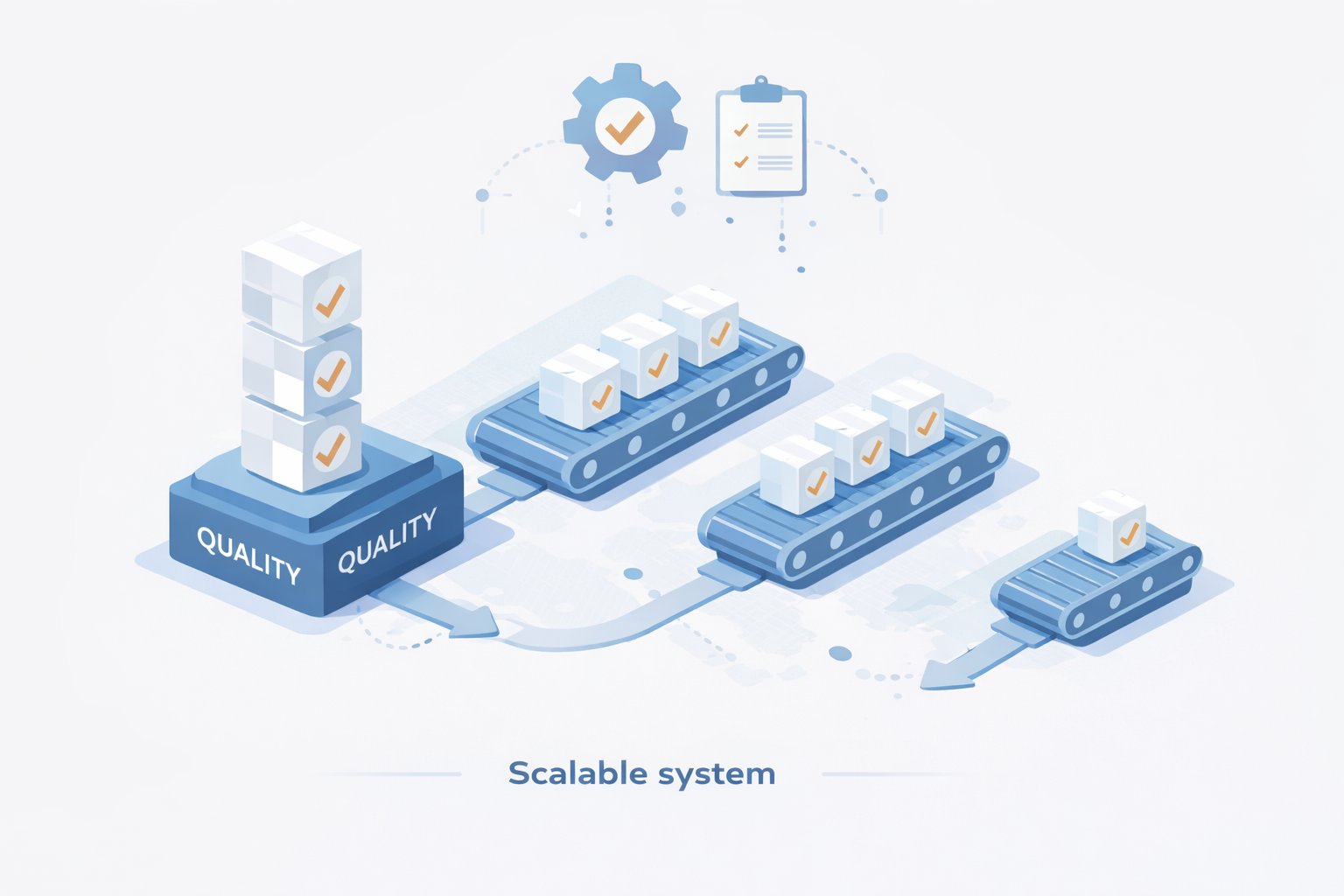
Whether addressing a specific skill gap or deploying a full delivery team, Make My Brand provides structured leadership, clear accountability, and execution oversight to maintain output quality. Organizations that adopt scalable workforce strategies with strong governance can grow without sacrificing control or quality.
Conclusion: Scaling with Flexibility, Delivering with Excellence
Building a flexible team does not mean compromising quality. With the right structure, processes, and oversight, flexible staffing solutions enable organizations to:
Respond quickly to changing demands
Access specialized expertise on demand
Optimize costs without slowing execution
Make My Brand enables this balance by structuring flexible teams that operate with the same accountability, governance, and performance standards as in-house functions. The result is controlled scaling, faster outcomes, and sustained quality - regardless of team size or engagement model.
Ultimately, flexibility and quality are not opposing forces. When guided by proven frameworks, they become complementary levers that drive sustainable growth.
Don’t let rigid teams slow down your momentum. Get in touch with Make My Brand to achieve growth without compromise.
Loading FAQs
Please wait while we fetch the questions...
Published on January 6, 2026 by Khushpreet Kaur