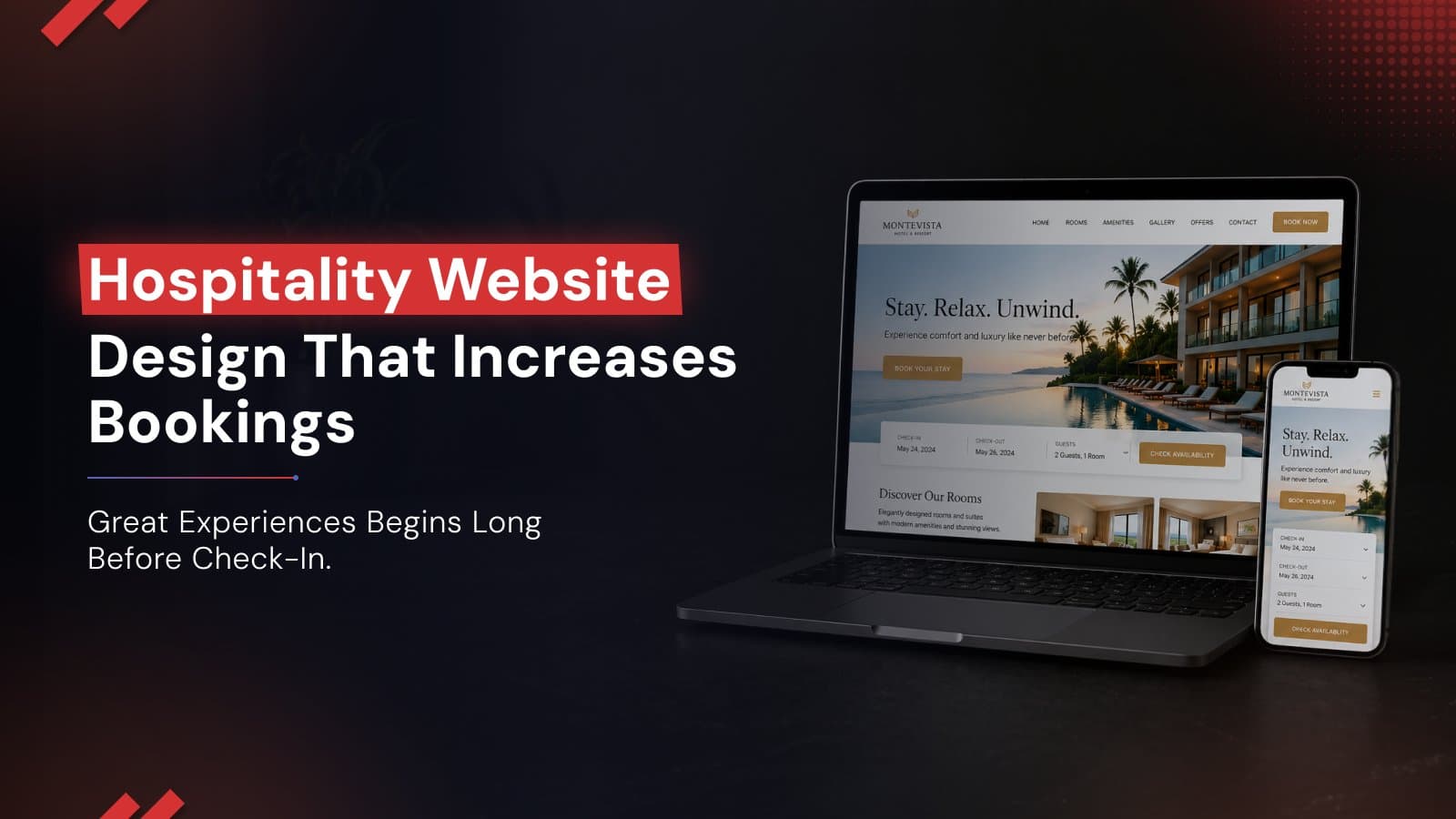
Hospitality Website Design That Increases Bookings: Improve Guest Experience Before Arrival
Is your healthcare site losing visibility to AI search platforms and Google AI Overviews? Discover how trust-first healthcare website design adapts to conversational search behaviour to capture high-intent patient bookings.
Before guests experience your property, they experience your website. In today’s digital-first travel journey, hospitality website design directly influences booking decisions, trust, and perceived value.
Today’s travelers:
Compare multiple properties in minutes
Expect instant clarity on pricing and availability
Rely on visuals and reviews to validate trust
Use AI-powered search and assistants to shortlist options
This shift has redefined hospitality website design from a branding exercise into a pre-arrival experience engine.
At Make My Brand, we approach this as a strategic layer - where UX, AI, and storytelling come together to shape guest perception before arrival.
In this blog, we explore how modern website design transforms pre-arrival guest experience and what it takes to stay relevant today.
From Website to Experience Hub: The Role of UX in Hospitality Website Design
Modern hospitality website design is no longer about static pages. It’s about creating an experience-driven platform powered by UX for hotels, where guests find answers instantly.
What This Looks Like in Practice
A high-performing hospitality website includes:
Clear room segmentation (not generic listings)
Transparent inclusions and pricing (breakfast, amenities, policies)
Local experience guides (attractions, dining, culture)
Arrival logistics (transport, check-in, timings)
Visual previews (rooms, spaces, surroundings)
Why It Matters
With platforms like Google already offering price comparison and reviews, your hospitality website design must match or exceed this experience to retain users.
Real-world example
Marriott International: Marriott’s website is structured around intent. Guests can:
Filter by experience (luxury, business, resort)
Compare properties instantly
Access detailed room, amenity, and loyalty information
The result? Less friction, faster decisions, and stronger trust - before booking even begins.
Booking-Friendly Websites: Where Hospitality Conversions Are Won
A booking-friendly website is critical in hospitality website design, ensuring users can move from discovery to booking without friction.
Even minor friction in the booking process can lead to abandonment. A slow-loading page, hidden pricing, or a complex form can instantly break trust.
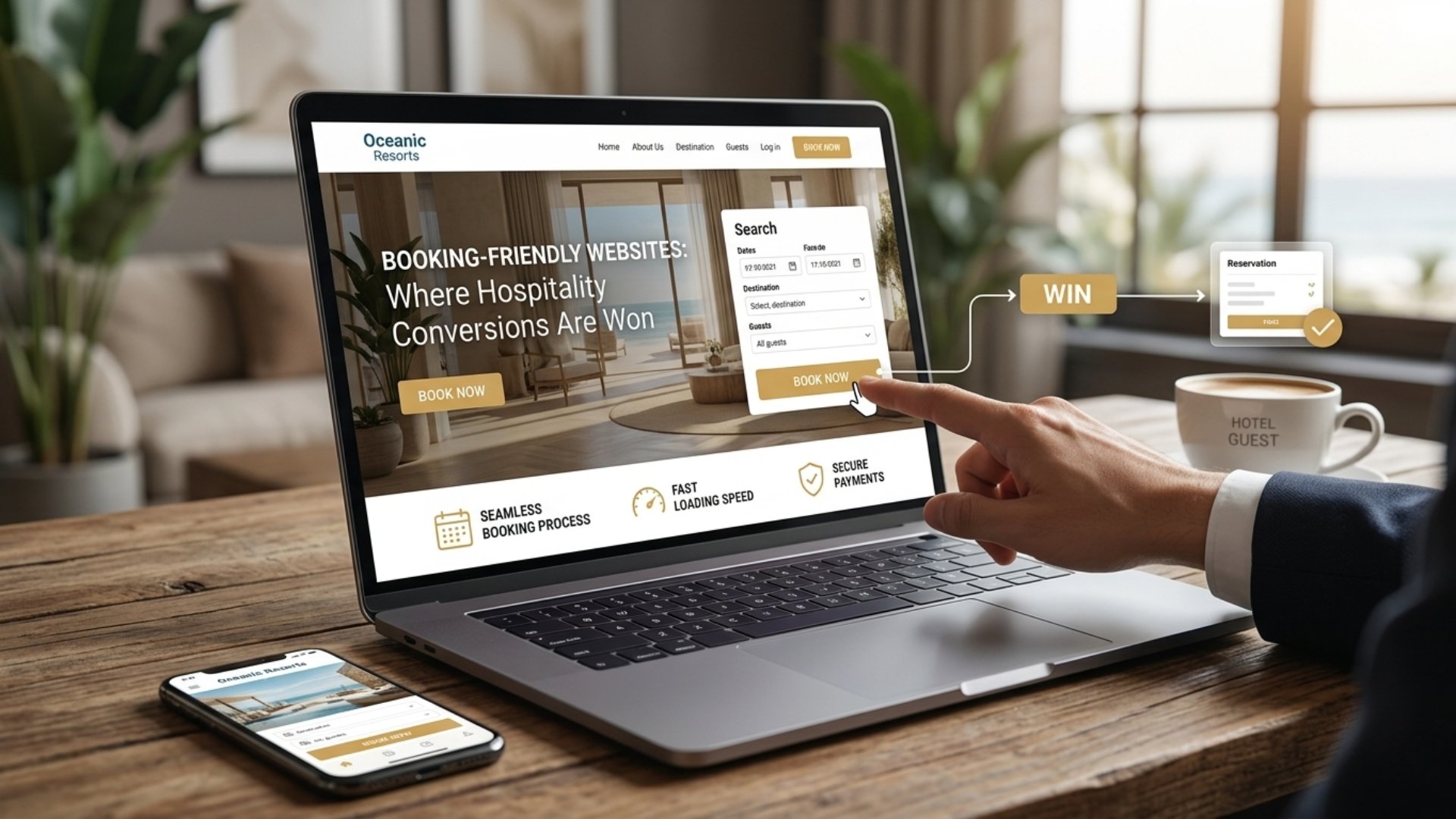
What defines a booking-friendly website:
A booking-friendly website is one where users can move from discovery to confirmation without friction.
Transparent pricing (no hidden fees)
Minimal steps to complete booking
Autofill and smart form design
Clear cancellation and refund policies
Persistent CTAs across the journey
Common mistakes to avoid:
Overloaded booking forms
Forced account creation
Confusing navigation between rooms and offers
Slow mobile performance
Reality check:
Your competitor is always one tab away. Friction is expensive.
Make My Brand addresses this through conversion-focused UI/UX and performance optimization, ensuring that design decisions directly impact revenue.
Personalization Is No Longer Optional
Personalization is a core component of modern travel site redesign strategies, enabling better UX for hotels and higher engagement. Personalization is no longer optional - it is expected. But the nuance lies in how it is delivered.
What guests want:
Relevant recommendations
Faster decision-making
Recognition across sessions
What they don’t want:
Overly invasive tracking
Irrelevant suggestions
Generic “personalized” messaging
High-impact personalization elements:
Dynamic pricing and offers based on user behavior
Returning visitor recognition with saved preferences
Tailored content for business vs. leisure travelers
Geo-based recommendations and messaging
At Make My Brand, personalization is built using first-party data and intent signals, ensuring it enhances - not disrupts - the journey.
Immersive Design: Reducing Uncertainty Before Arrival
Immersive visuals are a key pillar of hospitality website design, helping reduce uncertainty and improve booking confidence. Travel decisions are emotional. Guests are not just booking a room - they are visualizing an experience.
High-impact elements:
360° virtual tours of rooms and spaces
Cinematic property videos
Interactive maps showing nearby attractions
AR previews for rooms and amenities
Why It Works
Immersive design builds confidence, reduces booking hesitation, and sets accurate expectations. It transforms browsing into pre-arrival engagement.
Strategic insight:
The more clearly a guest can visualize their stay, the faster they convert.
Trust Signals: The Conversion Driver
Trust is not built through branding alone - it is reinforced through design. Guests are actively looking for reassurance before making a booking decision.
Essential trust signals:
Verified guest reviews and ratings
“Best price guarantee” messaging
Secure payment indicators
Clear policies (cancellation, refunds, check-in/out)
Awards, certifications, or recognitions
According to PwC, 46% of consumers are willing to pay more for brands they trust.
Where most websites fail:
Hiding policies in footers
Showing outdated reviews
Overloading pages with generic testimonials
Trust should appear before the booking step - not after. Make My Brand often integrates trust elements directly into the UX flow - ensuring credibility is built early in the user journey.
AI-Powered Discovery Is Changing Search Behavior
AI-driven discovery is reshaping hospitality website design, making structured content and intent-based UX essential. Search is evolving rapidly. Travelers are increasingly discovering hotels through AI-powered search experiences - not just traditional search results.
Platforms influenced by Google now prioritize:
Structured, well-organized content
Clear answers to user queries
Pages that align with search intent
What this means for hospitality websites:
Use structured data for rooms, pricing, and reviews
Build content around real traveler questions
Optimize for conversational queries (AI search)
Ensure consistency between visible content and metadata
Emerging shift:
Agentic AI and generative search are beginning to act on behalf of users, meaning your website must be machine-readable and user-friendly.
Where Make My Brand fits:
Through AISO (AI Search Optimization) and organic visibility growth strategies, Make My Brand ensures hospitality brands are discoverable across both traditional and AI-driven ecosystems.
Mobile-First Hospitality Website Design for Better UX and Bookings
Mobile is no longer secondary - it is the primary interface for travel discovery and booking. According to Google, mobile-first indexing means your mobile site determines your search visibility.
A Mobile-First UX for hotels Should Include:
Thumb-friendly navigation
Click-to-call and quick contact options
Fast load times (Core Web Vitals optimized)
Responsive design across devices
Smooth navigation and tap-friendly UI
Optimized images and scripts
Why performance matters:
Slow websites increase bounce rates
Poor UX for hotels reduces trust
Lag impacts booking completion
Make My Brand’s website development and performance optimization services ensure hospitality platforms are both fast and conversion-ready.
Accessibility and Inclusive Design
Inclusive design is no longer optional - it is expected. Guidelines from World Wide Web Consortium emphasize that accessible websites improve usability for all users - not just those with disabilities.
Accessibility essentials:
High contrast and readable typography
Keyboard-friendly navigation
Alt text for images
Clear form labels and instructions
Business impact:
Accessible design expands your audience and improves overall usability - especially for mobile users and international travelers.
Local Visibility and Pre-Arrival Discovery
Even the best-designed website needs strong visibility to attract the right audience.
Key local visibility drivers:
Optimized Google Business Profile
Accurate location data across directories
Local SEO content (destination guides, nearby attractions)
Location-based offers and campaigns
Why it matters:
Travel decisions are often location-first. If your brand is not visible locally, it is not considered.
Final Thought: Design the Stay Before It Begins
Hospitality website design is no longer about aesthetics - it is about experience orchestration. From personalization and immersive design to AI search readiness and frictionless booking, every element contributes to how a guest feels before they arrive.
The brands that win are those that:
anticipate guest needs
remove friction from decisions
build trust early
create emotionally engaging digital journeys
This is exactly where Make My Brand positions itself - as a growth partner - not just a service provider. Through UI/UX design, website development, AI integration, and performance marketing, Make My Brand helps hospitality businesses turn their websites into high-performing, experience-led platforms.
Ready to increase bookings with smarter hospitality website design? Connect with our experts today.
Loading FAQs
Please wait while we fetch the questions...
Published on April 30, 2026 by Abhishek Vasudev