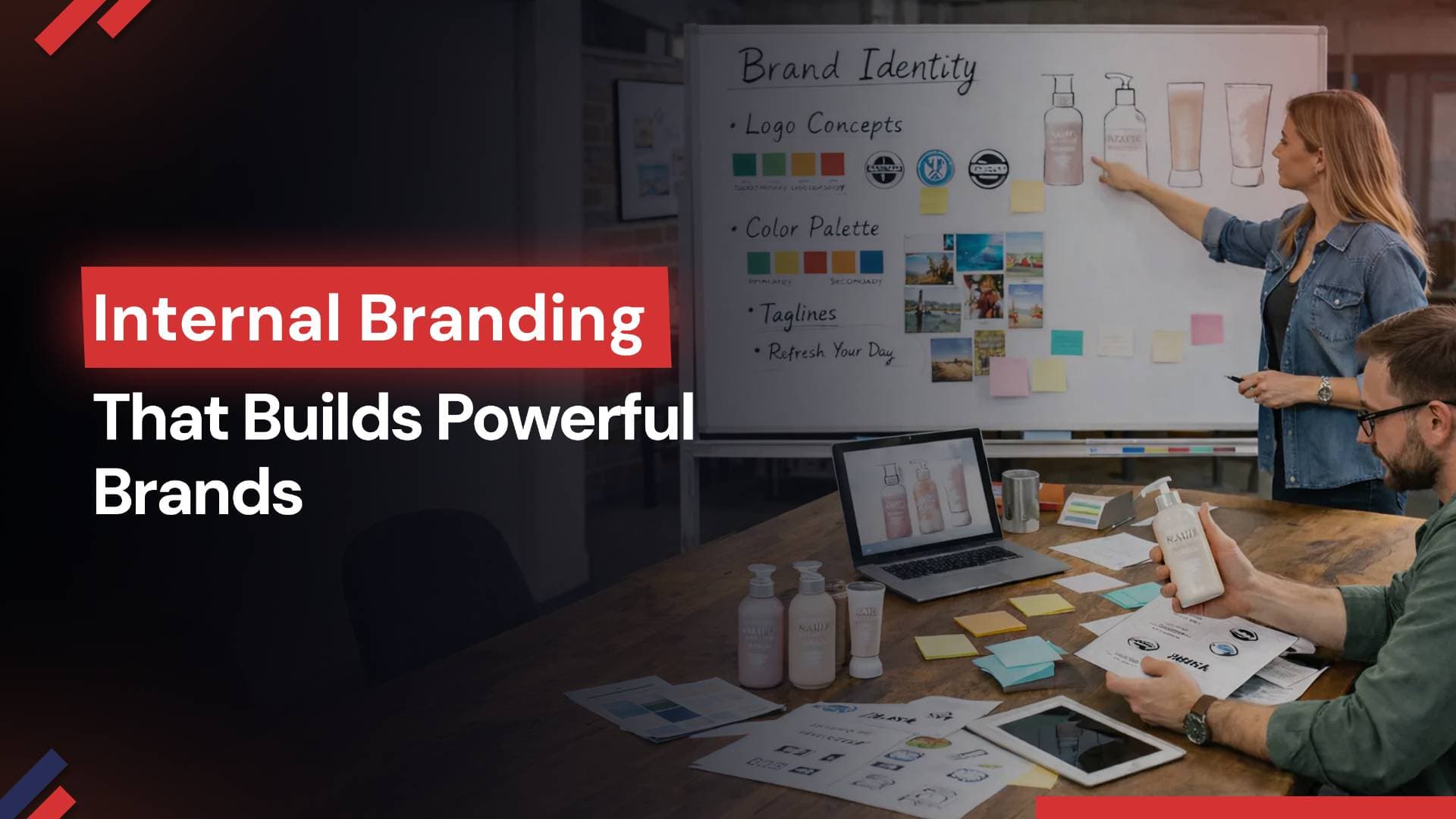
Internal Branding: How Company Culture Drives External Success
Internal branding aligns people with purpose, turning culture into a growth engine. When employees live the brand, consistency, trust, and performance follow—driving stronger customer experiences, lower turnover, and sustainable success from the inside out.
Internal branding - the practice of embedding a company’s values, mission, and identity into its workforce - is one of the most powerful drivers of external success. When people inside the organization truly understand and believe in the brand, that belief is reflected consistently in every interaction with customers, partners, and the market.
And the data confirms it.
A global CEO survey found that 71% of leaders rank company culture as a top driver of performance.
Organizations with high-trust cultures consistently outperform their peers, delivering stronger profitability and superior stock market returns.
In practical terms, this means that when employees are aligned with what a brand stands for, they don’t just execute tasks - they reinforce credibility, loyalty, and long-term growth at every touchpoint.
In this blog, we explore how internal branding connects company culture with external success, and why it has become a strategic imperative for sustainable growth.
What Is Internal Branding - and Why It Matters?
At its core, internal branding ensures that every person in the organization understands, believes in, and lives the brand’s purpose and values. It is not about posters on walls or slogans in presentations - it is about how culture shows up in everyday decisions.
This is where culture branding becomes real- when values translate into everyday decisions and behaviors.
When internal branding is done right, values stop being abstract words and start shaping behavior:
Teams collaborate because collaboration is a core belief.
Innovation happens because curiosity and experimentation are encouraged.
Customer care improves because service excellence is embedded in the culture.
A strong brand culture turns people into brand champions. They do not just perform tasks - they reinforce the brand through how they think, speak, and act.

This is also where employee brand activation plays a critical role. Through training, internal campaigns, recognition programs, and leadership communication, employees are equipped to actively represent the brand. The result is a workforce that does not merely work for the brand - it embodies it across every customer and partner interaction.
Why Consistency Inside Creates Strength Outside
One of the most valuable outcomes of internal branding is consistency.
When employees are aligned with the brand’s identity, everyone speaks with the same voice and acts from the same set of principles. True alignment happens when people “understand and embody what your brand stands for.” That understanding translates into stronger, more predictable brand experiences for the market.
In practice, this consistency is built through:
Leaders connecting company values to everyday goals.
Clear brand guidelines that shape communication and behavior.
Internal storytelling explains why decisions are made, not just what they are.
When teams understand the reasoning behind strategies and priorities, they naturally communicate them with confidence and clarity. Even informal conversations, emails, or social media activity begin to reinforce the same brand narrative.
That alignment is powerful.
It creates a unified organization where every interaction - internal or external - strengthens the brand instead of diluting it.
Where does internal branding become a strategic advantage?
At Make My Brand, we work from an inside-out philosophy. A strong internal brand - often referred to as brand culture - ensures that everyone, across functions and geographies, is aligned around a single, clear idea of who the company is and what it represents.
When that alignment is missing, customers feel it. Disconnected culture leads to inconsistent service, mixed messaging, and weakened brand experience.
When it is present, the impact is profound.
In one internal branding survey, a new hire shared:
“I actually feel like I’m part of something here.”
That sense of belonging is not emotional fluff - it is a business asset. When people feel connected to a mission, they bring greater energy, authenticity, and ownership into their work.
Research supports this reality:
Highly engaged teams are 18% more productive.
They experience up to 43% lower employee turnover.
For organizations that translate directly into better execution, lower hiring costs, and a more consistent customer experience.
Turning culture into brand consistency
This is why Make My Brand integrates internal alignment into every brand engagement. Before a company launches external campaigns, we ensure its internal messaging, tone, and systems are in sync. When teams understand the brand story clearly, they tell it consistently - whether through customer emails, sales conversations, support interactions, or digital platforms.
Our client's work repeatedly shows that when visual identity, voice, and language are unified across all internal and external touchpoints, the brand becomes easier to trust - and harder to ignore.
Internal branding doesn’t just shape how a company feels on the inside. It defines how the market experiences it on the outside.
How Culture Drives Business Results
A thriving culture is not a soft benefit - it is a measurable competitive advantage. Research from Great Place To Work, Fortune, and global workforce studies consistently show that companies with strong cultures outperform their peers across every major business metric.

The evidence is compelling:
Organizations featured on Fortune’s 100 Best Companies to Work For have outperformed the stock market by more than 3.3 times.
Businesses with inclusive, engaged cultures grow revenue up to 5.5× faster than less inclusive competitors.
Lower turnover alone has a powerful financial impact. Replacing an employee can cost thousands in recruitment, training, and lost productivity - so when people stay longer and perform better, profitability rises naturally.
But retention is only part of the story.
Strong cultures also drive execution, innovation, and user experience, which directly affects revenue growth.
Why is culture a bottom-line driver?
From a strategic perspective, culture is no longer viewed as an HR initiative - it is a business growth lever.
When people believe in what the company stands for, they invest more of themselves into the work. That energy carries through every customer interaction, every sales conversation, and every service experience - amplifying the impact of marketing and branding efforts.
When that belief is missing, the opposite happens. Disconnected teams create inconsistent messaging, diluted brand experiences, and missed opportunities.
In today’s competitive markets, culture is not just how a company feels on the inside — it is how the brand performs on the outside.
Key Benefits of Strong Internal Branding:
Higher Productivity & Innovation: Engaged employees “give higher levels of effort” and drive faster innovation. IBM research also finds organizations with a strong culture to innovate more rapidly.
Lower Turnover and Hiring Costs: High-trust cultures see 50% less turnover. This saves recruitment costs (Society for Human Resources Management (SHRM): ~$4.7K per hire) and preserves institutional knowledge.
Consistent External Brand Experience: A unified internal culture ensures the brand message is consistent externally. Customers sense when employees all “speak the same language.”
Greater Brand Trust & Reputation: Nowadays, buyers trust employee recommendations over ads. (Simply put, people trust people more than logos.) Engaged employees effectively amplify brand authenticity.
Better Financial Performance: Culture-focused firms regularly post stronger stock and revenue growth.
Activating Employees as Brand Ambassadors
Internal branding only creates value when it moves from strategy to everyday behavior. That shift begins with how clearly the brand story is communicated across the organization.
People need to understand more than what the company does - they need to understand why it exists and how their role supports that purpose.
High-performing organizations reinforce this connection through ongoing internal initiatives such as:
Sharing customer success stories
Highlighting examples of values in action
Recognizing teams that deliver on the brand promise
Allowing employees to experience the company’s products and services firsthand
These moments create emotional ownership - and ownership creates advocacy.

Leading companies use tactics such as:
Internal workshops and innovation challenges aligned to brand values.
Customer experience training built around brand voice and positioning.
Recognition systems that reward brand-aligned behavior.
The objective is simple: make the brand something people talk about, celebrate, and take pride in.
Internal branding should “celebrate wins, share behind-the-scenes stories, and highlight the impact of our work.” That sense of shared achievement builds connection, loyalty, and belief.
At Make My Brand, this comes to life through structured internal communication - from curated newsletters and digital channels to leadership town halls and recognition programs - all designed to reinforce a unified brand experience.
How does advocacy multiply brand reach?
When employees believe in the brand, they do not keep it to themselves - they naturally share it. This turns a connected workforce into a powerful, authentic marketing engine.
When people speak for the brand because they believe in it, the market listens.
Integrating Culture into Brand Strategy
A strong brand culture does not happen by accident. It is designed - deliberately, systematically, and in alignment with business strategy. That is why culture cannot be treated as something that follows branding; it must be built alongside it.
At Make My Brand, we use a holistic framework where brand strategy and culture strategy evolve together. The brand is not only expressed through visuals and messaging - it is embedded into how the organization hires, measures performance, communicates, and makes decisions.
This means the brand identity is operationalized across the business, including:
Mission and values built into leadership communication
Tone and personality reflected in internal and external messaging
Visual identity applied consistently across platforms
Hiring criteria aligned with brand behaviors
Performance metrics tied to brand-driven outcomes
Some practical steps include:
Define and Communicate Shared Vision: Make sure every employee understands the company's purpose. Use simple, memorable phrasing for mission statements and repeat it regularly (not just in the handbook).
Onboard with Brand Immersion: Introduce new hires to the brand through immersive onboarding. Schedule early meetings with leadership to discuss company vision and include brand story segments in training.
Align Culture with Brand Systems: Build reward and feedback mechanisms around brand-aligned behavior. For instance, recognize teams that solve customer problems in the spirit of your core values.
Foster Open Two-Way Dialogue: Encourage employees to ask “why” and give feedback on brand initiatives. When people feel heard, buy-in deepens.
Train Managers and Leaders: Since culture is set from the top, equip leaders to model brand values in decision-making and communication.
Insights from Make My Brand Case Studies
Across industries - from EdTech to healthcare to real estate - every engagement we undertake is designed to align internal and external brand systems. That means identity, messaging, and experience are not limited to customer-facing assets - they are embedded into how teams operate, communicate, and represent the brand.
Technology services brand: One identity, one voice
In a recent engagement with a technology services company, MMB developed a fully unified brand system using their branding framework - including logo, visual language, messaging, and brand guidelines - and implemented it across:
The company website
Sales and marketing materials
Internal communication platforms
Because the same brand language was visible on internal dashboards, presentations, and newsletters, employees quickly adopted the new identity. As the market began to see a more confident and consistent brand presence, engagement surged - with website sessions increasing by over 174% as messaging became sharper and more credible.
Why does this approach work?
By integrating internal branding into our Growth OS framework, Make My Brand ensures every creative asset, campaign, and digital experience is supported by people who genuinely understand and represent the brand.
That alignment creates a powerful feedback loop: engaged employees deliver better experiences, which leads to higher lead quality, stronger conversion, and greater customer loyalty.
When culture and brand move together, growth becomes predictable.
Conclusion: Where Culture Becomes Your Most Powerful Brand Asset
In today’s hyper-connected marketplace, the boundary between how a company operates internally and how it is perceived externally has virtually disappeared. Culture is no longer separate from brand - it is the brand in action. When internal branding is overlooked, even the most sophisticated marketing efforts struggle to deliver lasting results.
The path forward is clear.
Build a strong, clearly defined brand culture
Activate employees as authentic brand ambassadors
Ensure every touchpoint reflects the same values, voice, and purpose
At Make My Brand, we bring these principles together - integrating culture, brand strategy, and digital execution into one cohesive growth system. From brand architecture to marketing campaigns, everything is designed to be supported by teams who genuinely understand and represent the brand.
Your brand starts from within. Connect with Make My Brand to build a culture-led strategy that drives growth.
Loading FAQs
Please wait while we fetch the questions...
Published on February 3, 2026 by Khushpreet Kaur