Multi-Channel Marketing: Boost Traffic & Conversions Efficiently
Multi-channel marketing helps brands reach customers across social, search, email, and offline touchpoints. When integrated, these channels boost visibility, trust, and conversions. This blog explains the model, its benefits, and how Make My Brand builds unified, high-impact growth systems.
In today’s fragmented media environment, customers interact with brands across multiple touchpoints. From social media and search to email and in-store visits, every touchpoint shapes how they perceive a brand. Businesses that understand this shift are already seeing the impact: research shows businesses using multi-channel marketing noticed an average of 24% increase in revenue. To stay relevant and connected, businesses must meet customers wherever they are and deliver value efficiently.
This blog explores how a multi-channel approach works, how it differs from omnichannel marketing, and how an integrated marketing strategy can accelerate business growth. By the end, you’ll know exactly how to plan, align, and measure campaigns that amplify your brand presence across every touchpoint.
What Is Multi-Channel Marketing?
Multi-channel marketing means using multiple channels independently to reach customers. Each channel runs its own campaign or message. By appearing on the channels your audience prefers, a multi-channel strategy casts a wide net. It builds brand identity, enables personalization by channel, and generates more data at each touchpoint for future optimization.
Weaving channels together (versus treating them as silos) is key to nurturing leads efficiently through the funnel and maximizing conversions. Make My Brand design such cohesive strategies, ensuring each channel amplifies the others in terms of revenue growth.
For example, while working for Dublin Technology Center, we aligned organic visibility, paid ads, UI/UX, automation, and content into one unified system. Because every channel reinforced the other, the brand grew from zero to 11,000+ organic users, recorded 62,000+ interactions, and generated 621 leads at $0.87 per lead, all on a fast, <2-second-loading, fully indexed website. Read our Real Estate Growth Case Study here.
The strength of this approach lies in its flexibility. Each channel has its own audience, behavior, and intent, which allows brands to tailor their communication accordingly while maintaining a consistent brand voice.
Multi-Channel vs. Omnichannel: Key Differences
Although often used interchangeably, multi-channel and omnichannel marketing differ in focus. Multi-channel is channel-centric- each platform operates individually- while omnichannel is customer-centric, offering one seamless journey.
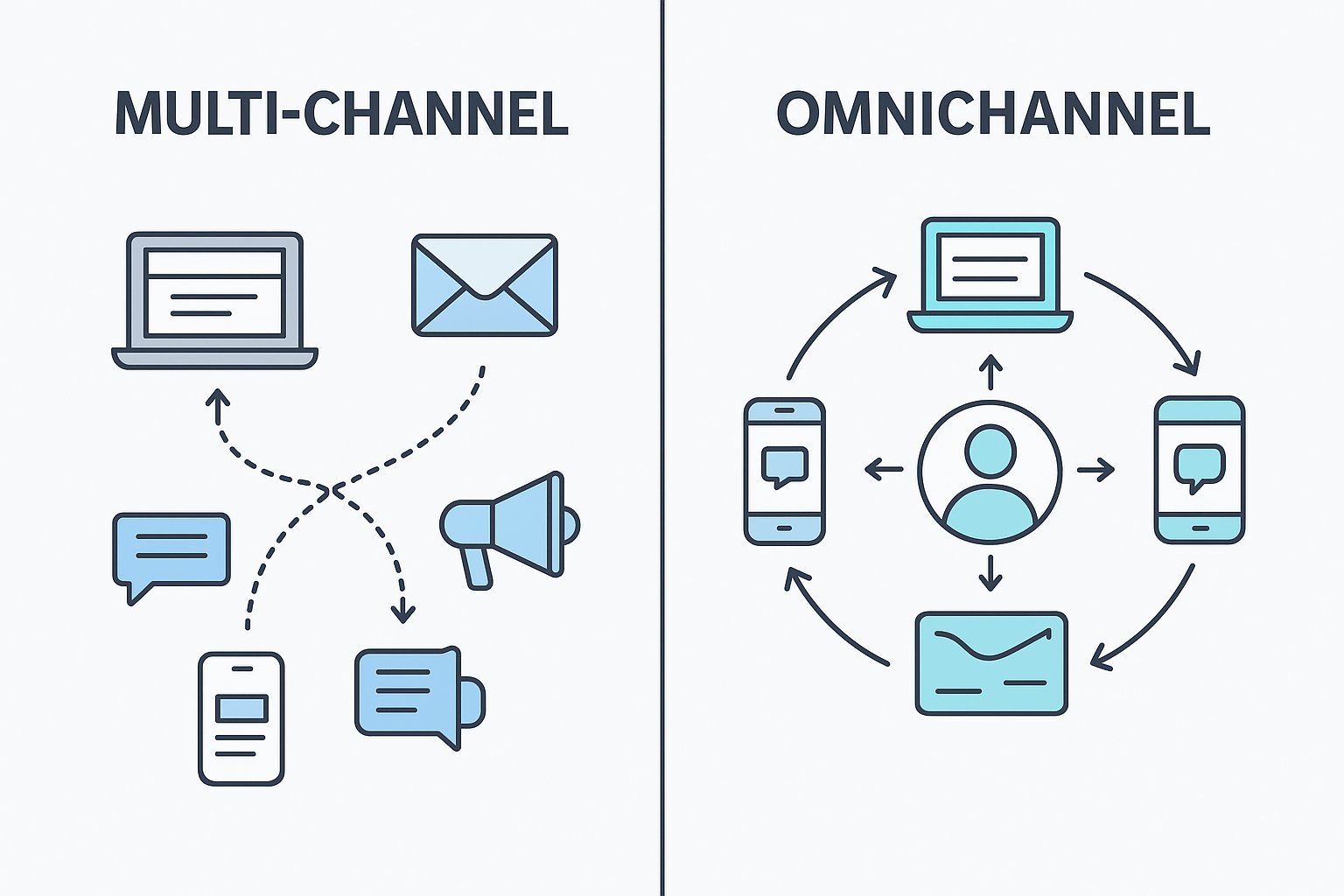
The table below summarizes the differences:
Aspect | Multi-Channel Marketing | Omnichannel Marketing |
Core Focus | Expands brand presence across multiple platforms to reach a broader audience. | Unifies all customer touchpoints for a consistent and seamless experience. |
Objective | Maximizes visibility and engagement through distinct yet coordinated channels. | Ensures a continuous and personalized customer journey across every channel. |
Channel Management | Each channel operates independently but aligns with the overall brand goal. | All channels are interconnected, sharing data and insights for real-time alignment. |
Customer Experience | Offers varied brand interactions based on platform behavior. | Provides a single, integrated experience where transitions between platforms are effortless. |
Data Usage | Data is collected per channel and analyzed for performance optimization. | Data is shared across platforms to create a unified view of customer behavior. |
Best For | Businesses aiming to expand their reach, test markets, and strengthen channel-specific strategies. | Businesses ready to scale through deep personalization and cross-channel integration. |
Implementation Complexity | Easier to implement with clear roles for each platform. | Requires advanced tools, automation, and coordinated team efforts. |
Growth Advantage | Builds a strong brand presence and drives conversions from multiple sources. | Enhances customer loyalty and lifetime value through experience consistency. |
In essence, multi-channel ensures presence across diverse platforms, while omnichannel ensures a unified experience across them. At Make My Brand, we blend both - leveraging multi-channel precision with omnichannel integration - to create consistent, measurable growth.
Key Marketing Channel Categories
A robust multi-channel plan covers all these categories:
Owned Channels
Owned channels are your brand’s strongest foundation for long-term growth - the platforms you control entirely. These include your website, email newsletters, SMS or WhatsApp campaigns, and branded applications.
At Make My Brand, we treat owned channels as the center of the customer journey - where interest turns into engagement and conversions. Through compelling storytelling, optimized UI/UX and automation-led workflows, we help brands educate, nurture, and convert audiences directly.
For instance, a well-crafted email campaign or personalized WhatsApp outreach can re-engage past visitors, share exclusive offers, and build loyalty - all without additional ad spend.
Paid Channels
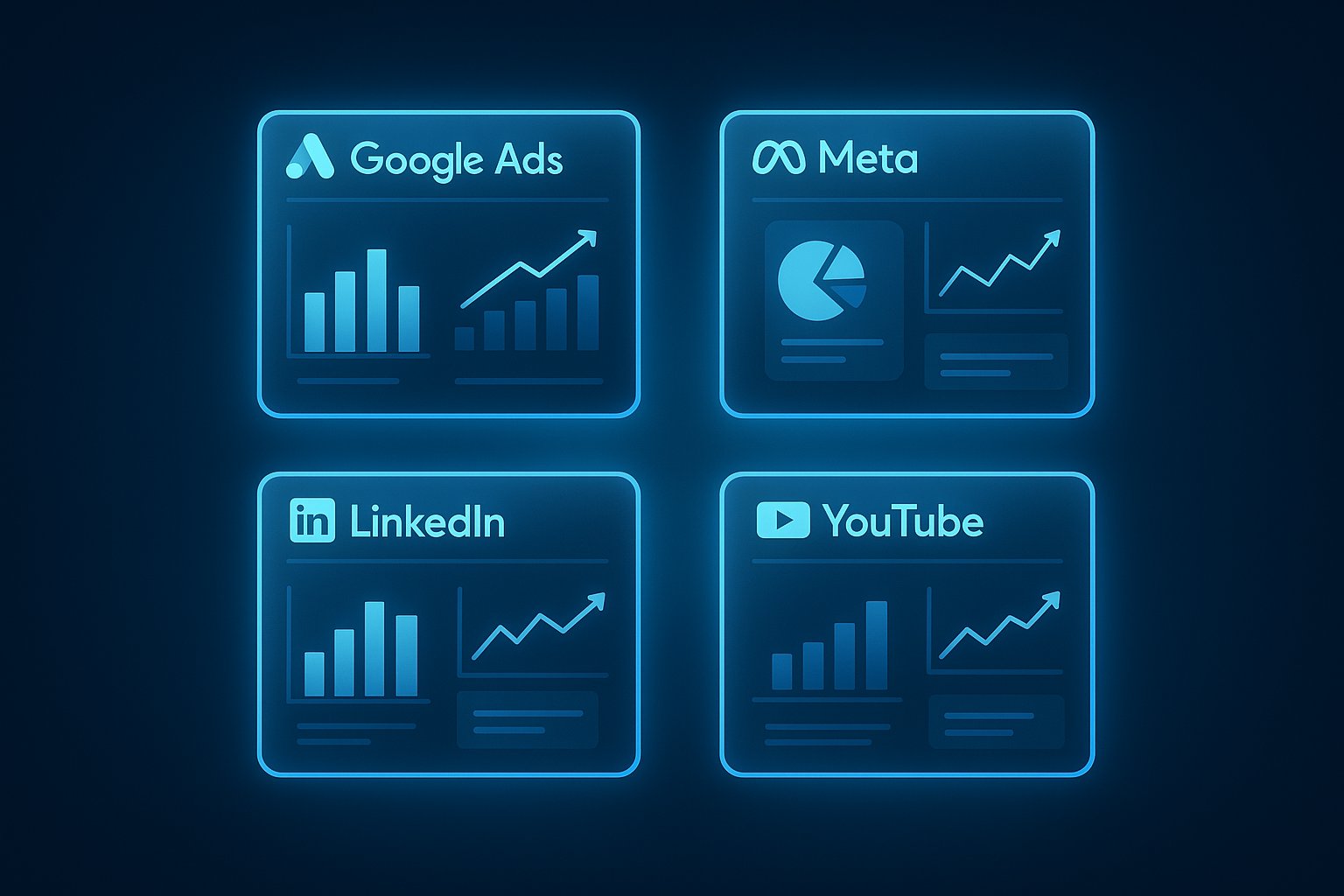
Paid channels act as growth accelerators within a multi-channel marketing ecosystem. These platforms - including Google and Bing Ads (Search and Display), Meta (Facebook and Instagram), LinkedIn, and YouTube - allow brands to achieve immediate reach and measurable impact.
By combining advanced audience segmentation with creative testing, Make My Brand ensures every paid campaign speaks to intent-driven users. Data-backed optimization, performance marketing, and consistent messaging across ads and landing pages enhance ROI at every stage.
Retargeting further strengthens results by re-engaging users who have already interacted with your brand, converting interest into action while reducing acquisition costs.
Organic Channels
Organic channels are where brands earn attention through value, not spend. SEO, blog content, YouTube videos, and social media engagement form the backbone of organic visibility.
Make My Brand builds authority and trust by creating content ecosystems that align with user intent. Through keyword optimization, content strategy, and consistent brand storytelling, we ensure your brand ranks, resonates, and retains.
While organic efforts take time, their compounding effect drives sustainable growth - converting visitors into leads without ongoing ad dependency.
Earned Channels
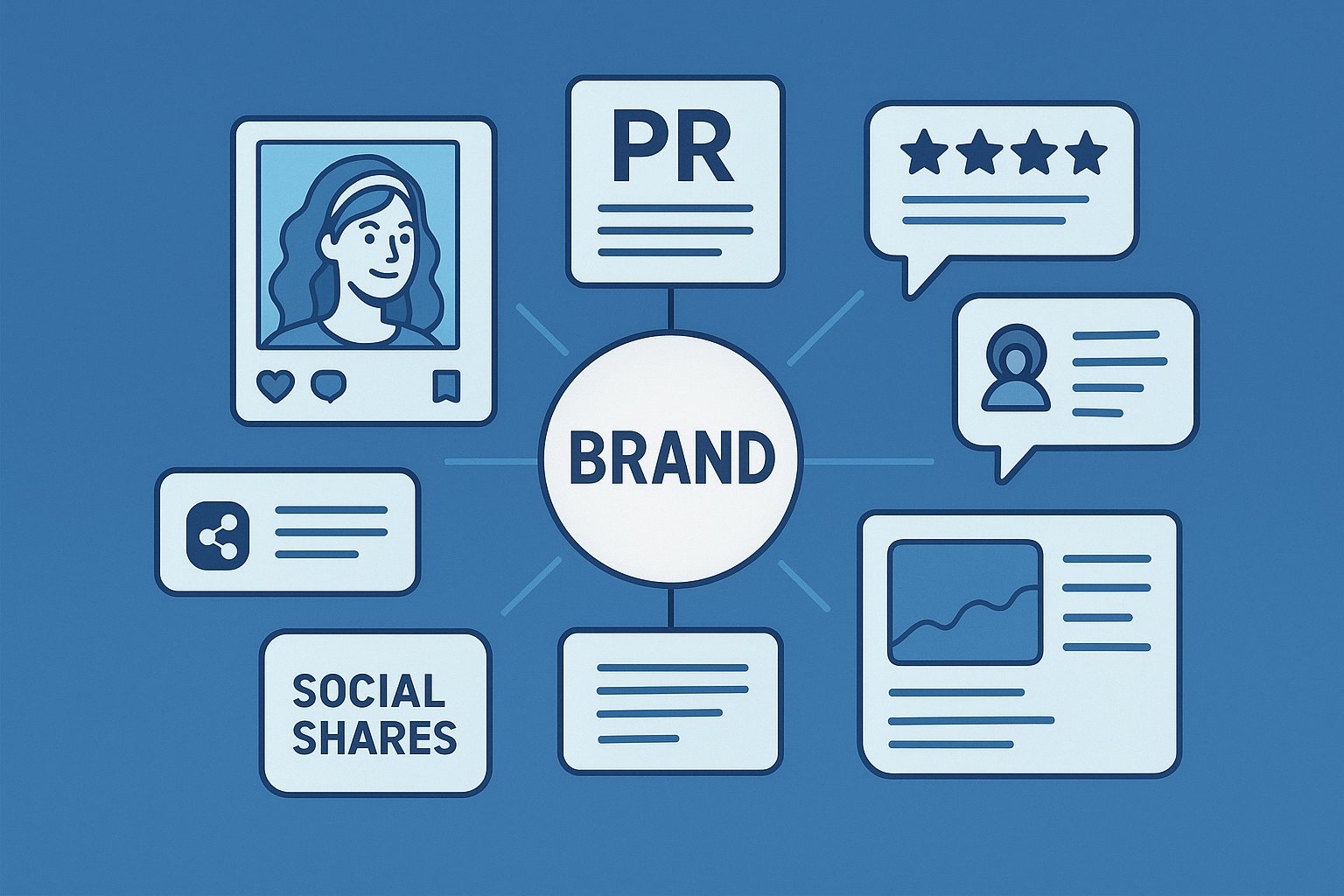
Earned channels amplify your credibility through others’ voices. These include PR mentions, influencer collaborations, customer testimonials, and online reviews.
At Make My Brand, we integrate earned media into the growth framework to strengthen social proof and authenticity. When audiences see trusted sources endorsing your brand, it accelerates trust and conversion. Encouraging satisfied clients to share experiences or feature success stories in digital PR can dramatically extend reach and reputation.
Offline Channels
Offline marketing still plays a critical role in shaping perception and expanding reach - especially when aligned with digital touchpoints. From print and radio ads to billboards, events, and in-store promotions, offline efforts drive awareness and complement online campaigns.
Make My Brand bridges traditional and digital seamlessly - connecting offline actions with online analytics. For instance, a QR code on a brochure or a geo-targeted event campaign can feed directly into your digital funnel, ensuring measurable impact from every interaction.
Each category plays a role: owned/organic builds lasting SEO and engagement, paid accelerates visibility, earned builds trust, and offline delivers mass reach. Research finds that multi-channel shoppers have an average of 30% higher customer lifetime value. When combined thoughtfully, each medium’s strengths compound.
How to Build an Integrated Multi-Channel Campaign
The power of multi-channel marketing lies in coordination. Rather than disjointed blasts, Make My Brand designs campaigns where each channel feeds the others. We start with clear buyer personas and a unified funnel, then assign roles to each channel. For example, social media and ads generate awareness; email and website content nurture interest, SEO and blogs build long-term pull, and in-store or offline touchpoints finalize the sale.
This integrated approach has proven results. Make My Brand’s own case study illustrates this.
For a coding academy client, our growth “pod” (Web Dev, Content, SEO, paid media, and, marketing automation) delivered end-to-end results. The campaign attracted 6,400+ organic users and achieved a 16.5% CTR — far above industry benchmarks.
Read Full Growth Case Study
Success came from one simple principle: integration. SEO insights shaped paid ad messaging, website design supported user flow, and email nurtures closed the loop.
Finally, measurement and attribution tie it together. Make My Brand set up holistic dashboards such as in GA4 + Looker, that consolidate data from every channel. This allows us to see which combinations of tactics (say, a Google search ad + an email drip) produce the best results. With unified dashboards in GA4 and Looker, Make My Brand tracks every touchpoint, enabling real-time optimization across campaigns.
While multi-channel tactics are essential, the ultimate goal is omnichannel growth, a fully unified customer journey. By placing the customer at the center, omnichannel strategies ensure that every channel reinforces the others.
Conclusion
As marketing evolves, relying on one or two channels isn’t enough. Multi-channel marketing helps brands meet customers wherever they are- building awareness, trust, and conversions. But the real impact comes when it’s part of an integrated strategy where every channel works together toward one goal.
That’s where Make My Brand excels - combining storytelling, data, and technology into one cohesive growth engine. From SEO and content to paid ads and automation, we ensure every channel amplifies the next.
Ready to create an integrated marketing ecosystem? Connect with Make My Brand and start turning fragmented efforts into measurable business growth.
Loading FAQs
Please wait while we fetch the questions...
Published on November 26, 2025 by Khushpreet Kaur