
9 Specialized AI Marketing Tools for Business Growth
Discover 9 specialized AI marketing tools that help businesses streamline lead generation, improve search visibility, optimize paid campaigns, personalize customer experiences, and automate key marketing operations.
Most commercial marketing teams waste thousands on celebrated software suites that churn out generic filler. True market differentiation demands purpose-built systems that capture qualified accounts, fix operational drag, and convert pipeline traffic into signed agreements.
Strategic operators skip saturated consumer apps in favor of dedicated software that executes high-yield tasks. Deploying the best AI marketing tools gives direct control over customer acquisition costs without inflating staff headcount.
Categorizing AI Tools for Marketing Across Functional Disciplines
Enterprise growth operations require dedicated tools built for distinct marketing branches. Running every assignment through a single generic text generator yields disjointed creative assets and flat conversion rates. High-performing teams distribute their AI marketing software across specialized divisions:
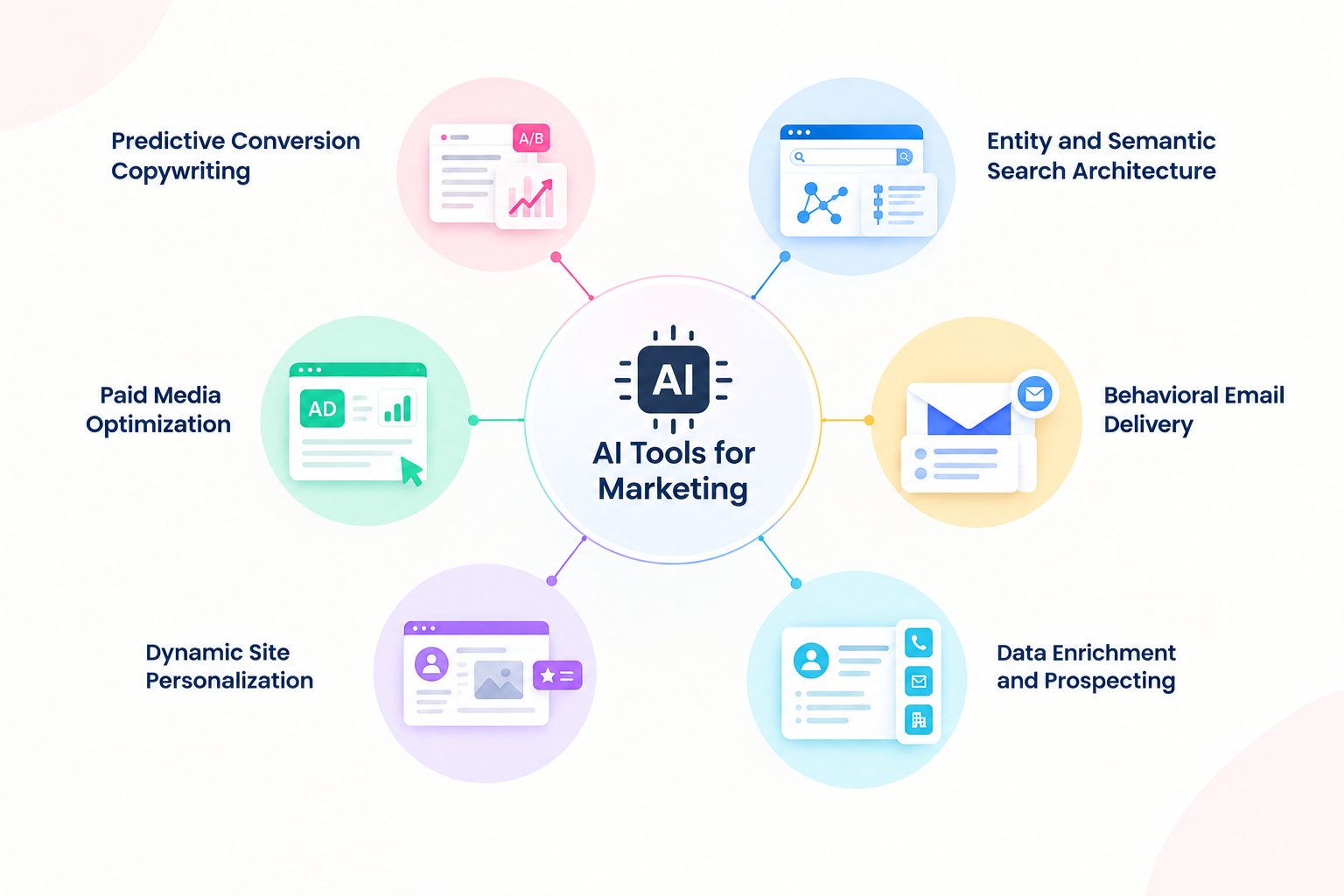
Predictive Conversion Copywriting: Platforms test semantic variations against historical buyer databases to forecast conversion lift prior to campaign launch.
Entity and Semantic Search Architecture: Technical engines crawl knowledge graphs, construct structured schemas, and place contextual internal links across domains.
Paid Media Optimization: Autonomous ad platforms continuously manage bid caps, audit creative fatigue, and generate visual variations across programmatic networks.
Behavioral Email Delivery: Machine learning engines predict personal inbox reading patterns, staging individual email deliveries when target prospects check messages.
Dynamic Site Personalization: Tools recognize which business is browsing your site, instantly swapping in custom headlines, offers, and client stories.
Data Enrichment and Prospecting: Pipeline automation tools crawl public registries, verify contact identities, and trigger multi-channel sales actions.
Architectural Evaluation Standards for Decision-Makers
Evaluating AI marketing tools for business requires deep scrutiny before allocating software capital:
Proprietary Knowledge Isolation: Platforms must guarantee that internal business records, client information, and revenue data never enter shared training repositories.
Native API Stack Synchronicity: Tools must transmit clean records directly into centralized customer databases without reliance on CSV exports.
Multi-Step Execution Playbooks: High-yield systems execute complex multi-tiered routines across different channels rather than stopping at single-sentence prompts.
Verifiable Revenue Attribution: Selected software must generate quantifiable pipeline metrics, showing clear attribution from initial contact through closed sales.
9 Best AI Marketing Tools for Business Growth
The software selections below represent field-tested platforms vetted across live customer acquisition pipelines. Rather than chasing generic conversation models, our team evaluated these specialized systems based on actual execution speed, technical stability, and verifiable commercial impact.
1. Anyword (Performance Copywriting & Conversion Scoring)
Creative teams often waste advertising capital on subjective messaging decisions, arguing over copy variations that fail once published. Anyword solves this problem by pairing natural language models with historical conversion data across billions of ad impressions.
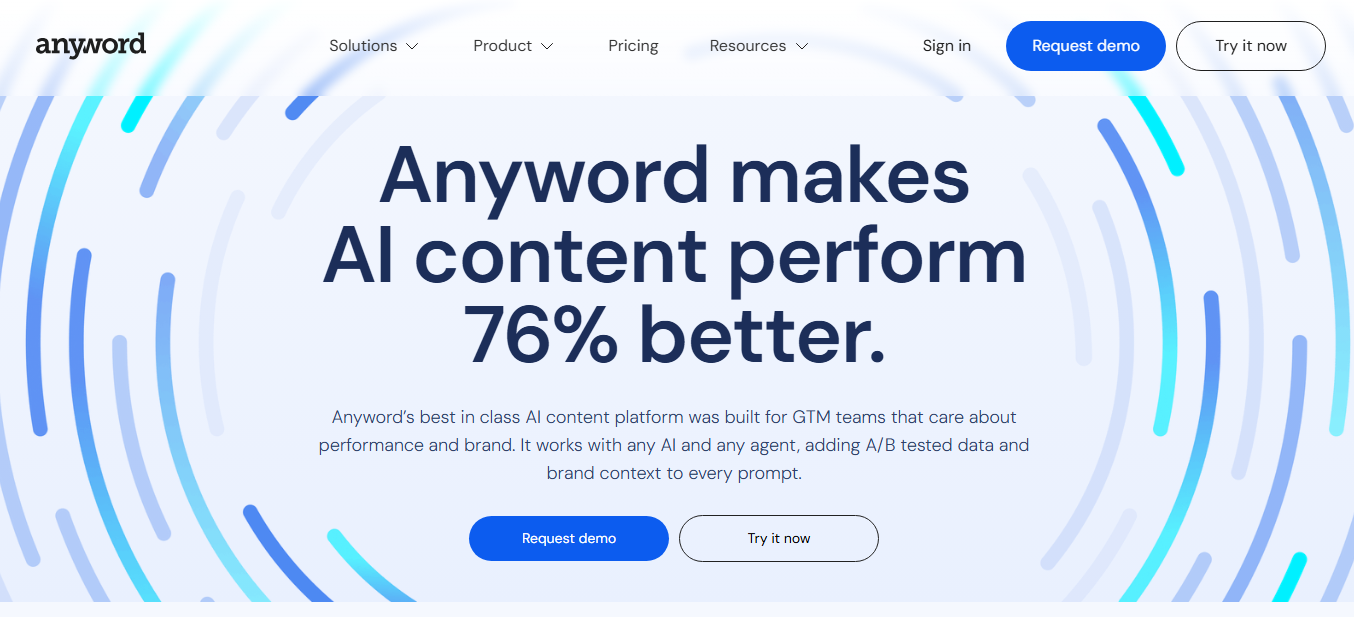
The software evaluates copy drafts against demographic models, assigning a predictive performance score before any campaign goes live. By linking directly into enterprise ad accounts, it ingests post-click conversion data to refine future generation routines.
Teams pairing Anyword with AI predictive analytics and a structured AI branding initiative preserve corporate positioning while testing headlines that systematically lift conversion rates.
Best Features:
Predictive performance scoring for headlines and body text
Custom demographic modeling
Native ad account integrations
Brand voice governance dictionaries.
Pros:
Removes subjective guesswork from creative production
Continuously learns from live ad conversion figures
Integrates directly with Google, Meta, and LinkedIn ad managers.
Cons:
Custom predictive models trained on internal enterprise data require premium plan tiers
Lower-tier plans restrict monthly word processing allowances
User Rating: 4.8/5 on Capterra.
Pricing: 7-day free trial available; paid plans start at $39 per month billed annually.
2. InLinks (Semantic SEO & Knowledge Graph Optimization)
Search engine algorithms no longer evaluate web pages based on repetitive keyword strings; modern search algorithms interpret concepts as semantic entities mapped within broad knowledge graphs. InLinks automates this technical discipline.
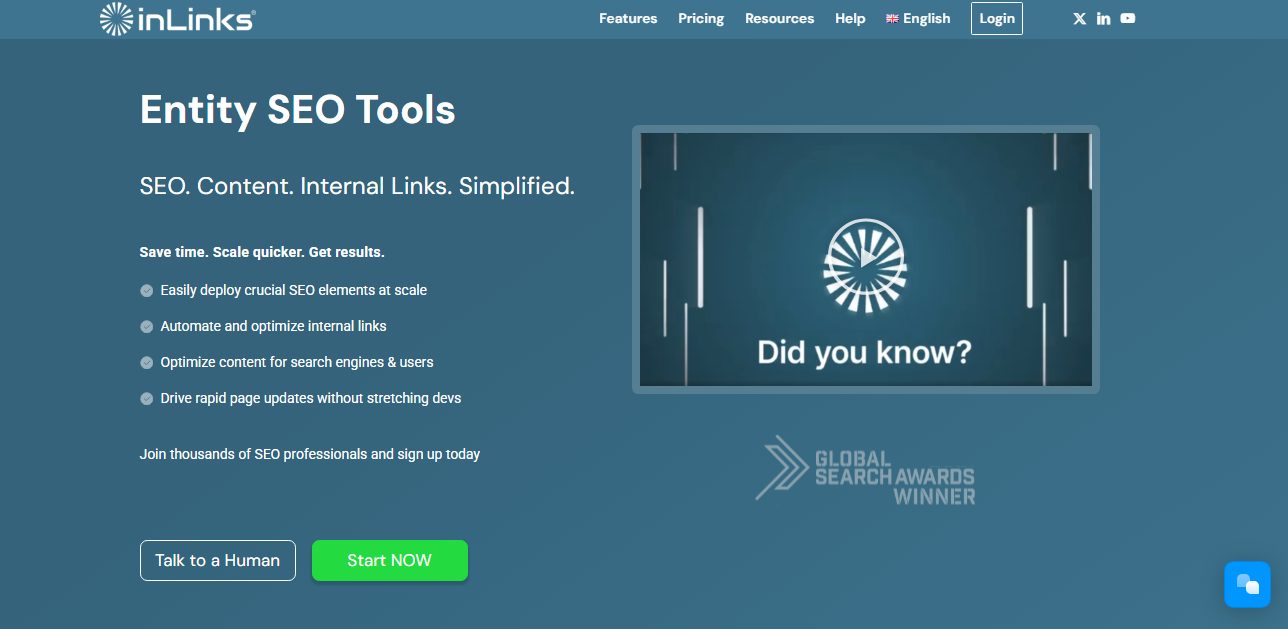
The platform crawls a domain, constructs an internal topical graph, and connects related articles through automated internal links placed via a lightweight JavaScript snippet. Content strategists pursuing systematic AI search optimization use InLinks to eliminate keyword cannibalization. They enrich content with automated JSON-LD schema, and demonstrate direct topical authority without manual code changes.
Best Features:
Automated contextual internal linking
Automated JSON-LD entity schema generation
Knowledge graph topic gap mapping
Semantic content editor.
Pros:
Automates internal link architecture across hundreds of pages
Injects valid schema without web engineering tickets
Builds clear topical authority.
Cons:
Requires placing a JavaScript code snippet in site headers
The analytical interface requires training for non-technical writers.
User Rating: 4.9/5 on Capterra.
Pricing: Paid subscriptions start at $49 per month for the Freelancer plan.
3. Madgicx (Autonomous Ad Management & Paid Media Optimization)
Performance media buyers struggle with creative fatigue, rising bids, and time-consuming manual budget reallocations across social advertising platforms. Madgicx functions as an autonomous command center for Meta advertising operations.
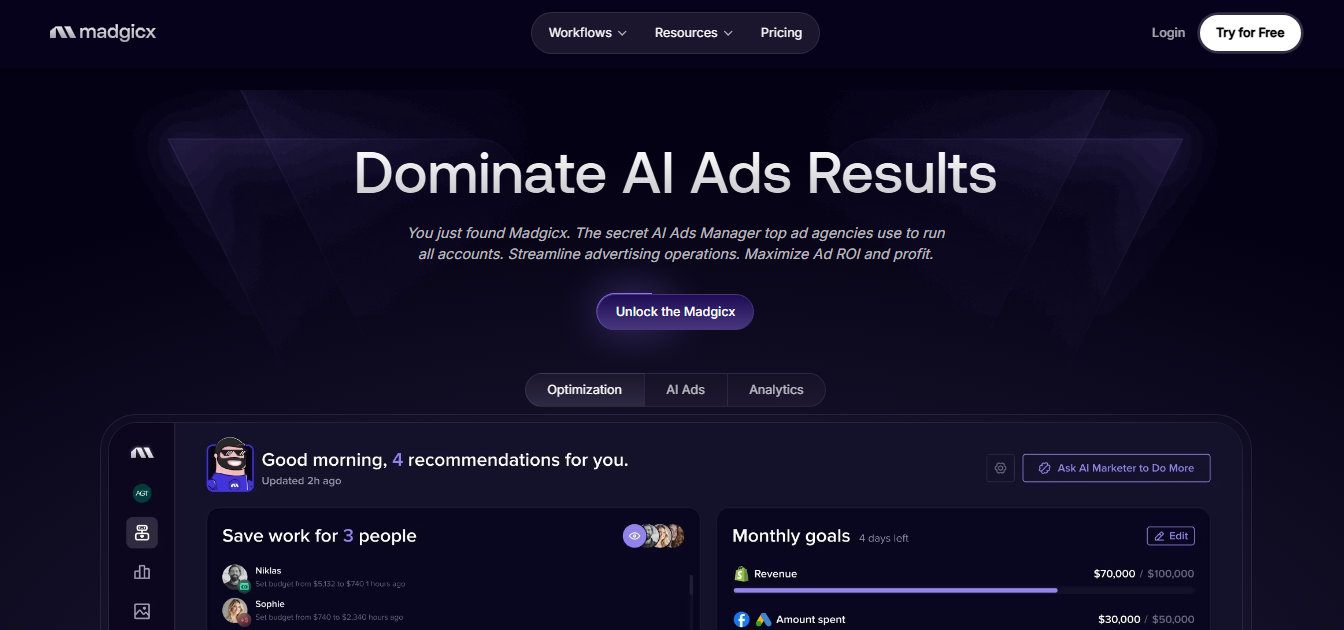
Its machine learning engine evaluates creative performance across all stages of the sales funnel, shifting daily spend toward high-converting creatives and pausing ads suffering from audience fatigue. Built-in creative studio tools let marketers generate graphic variants based on top historical performers.
When evaluating Google Ads vs Meta Ads, growth marketers implement Madgicx to manage bids autonomously and protect return on advertising spend.
Best Features:
AI Marketer autonomous auditing agent
Creative asset fatigue detection
Automated full-funnel audience creation
Server-side tracking integrations
Pros:
Protects media budgets from wasted spend through rule-based automation
Visualizes ad performance across lifecycle stages in one dashboard
Replaces daily manual bid adjustments with automated rules
Cons:
Demands steady baseline ad spend to produce reliable algorithmic actions
Pricing scales up based on monthly media spend
User Rating: 4.3/5 on Capterra (4.6/5 on G2)
Pricing: 7-day free trial available; paid subscriptions begin at $45 per month
4. Seventh Sense (Behavioral Email Send-Time Optimization)
Batch email campaigns suffer from low engagement. Sending messages to thousands of contacts at the same moment means that most arrive when recipients are offline or overwhelmed. Seventh Sense fixes this inefficiency by optimizing delivery on an individual contact level within HubSpot and Marketo systems.
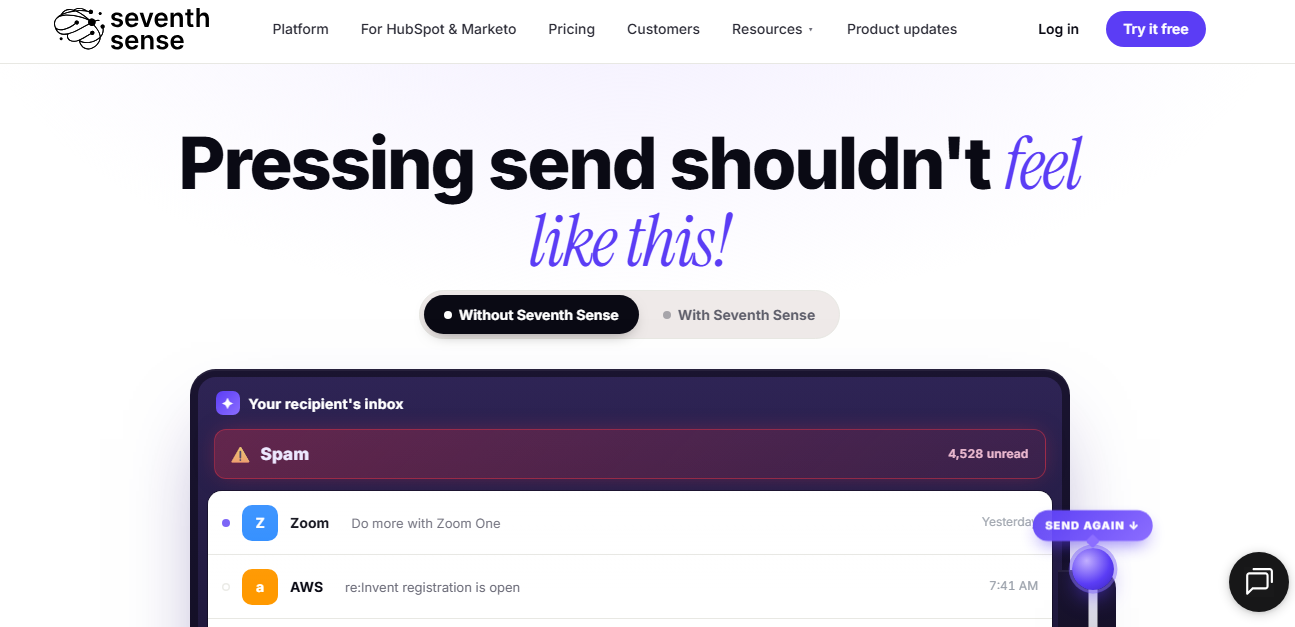
The machine learning model tracks the historical inbox engagement habits of every subscriber, dispatching marketing emails only when that individual is most likely to check messages. It staggers deliverability throughout the day rather than sending massive bulk waves.
Commercial organizations use this individual delivery mechanism to lift open rates, increase click conversions, and protect sender domain reputation from spam filtering.
Best Features:
Individual contact send-time optimization
Automated message throttling
Subscriber engagement fatigue tracking
Native HubSpot and Marketo integration
Pros:
Improves open rates on existing contact lists
Staggers delivery batches to prevent email servers from flagging marketing domains
Identifies disengaged contacts to keep lists clean
Cons:
Requires an active HubSpot or Marketo subscription
Demands a 30-to-60-day historical activity period before delivering peak algorithmic results
User Rating: 5.0/5 on Capterra
Pricing: Free trial available; paid subscriptions start at $180 per month for HubSpot environments
5. VWO (Experimentation, Personalization & Behavioral Analytics )
Static web pages fail to convert varied audiences with differing requirements, industry challenges, and budget sizes. VWO solves this conversion hurdle by turning standard business websites into dynamic testing environments.
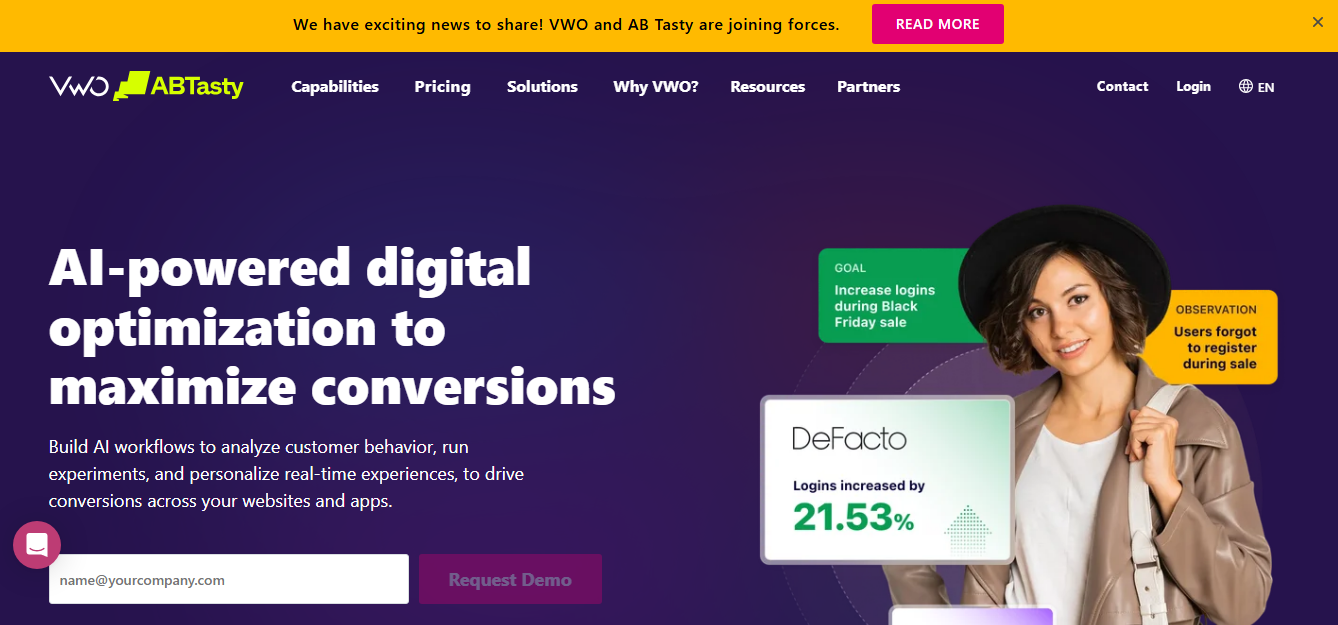
The platform combines an intuitive visual editor with a Bayesian statistical and reporting capabilities. Marketers build split tests, adjust page layouts, and deploy dynamic content rules based on visitor referral sources, geolocation, and past on-site actions. Built-in heatmaps and session recordings show where visitors drop off, providing diagnostic context for each experiment.
Commercial organizations aiming to generate leads fast implement VWO to validate conversion hypotheses and deploy many page variations without requiring developer involvement for routine visual changes.
Best Features:
Bayesian-powered experimentation and reporting
Behavioral personalization based on visitor attributes
Visual no-code editor with optional code customization
Heatmaps and session recordings through VWO Insights
Pros:
Unifies A/B testing, behavior analytics, and dynamic content on a single platform
Empowers marketing teams to launch experiments without developer queues
Delivers reliable statistical readouts to avoid false-positive testing conclusions
Cons:
Pricing climbs significantly as monthly visitor volume scales
Advanced capabilities and higher usage limits vary by plan
User Rating: 4.5/5 on Capterra
Pricing: VWO offers free access options and paid plans with pricing based on the product and usage requirements.
6. OpusClip (Long-Form Video Repurposing & Virality Curation)
Producing short-form video for social networks typically requires video editors to scrub through hours of footage, manually cut clips, format aspect ratios, and generate subtitles. OpusClip automates this multimedia pipeline.
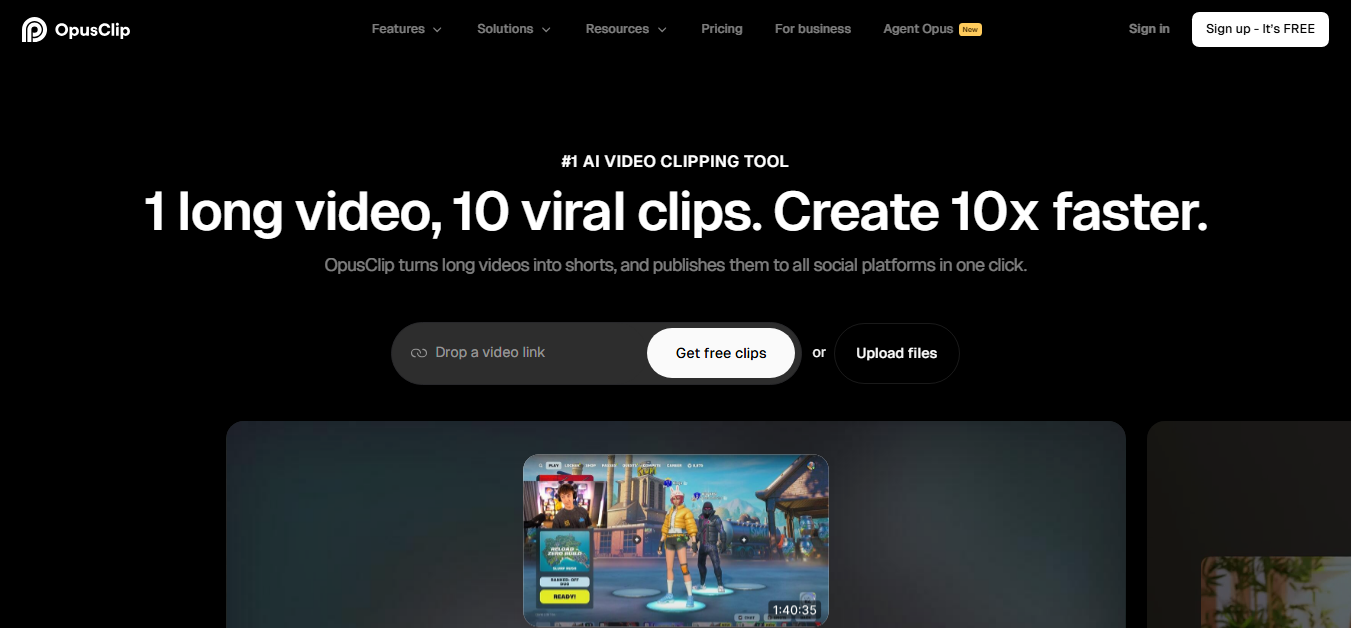
The platform ingests full-length webinars, executive interviews, or podcasts, using natural language analysis to locate high-impact hooks and memorable statements. It extracts individual short-form clips, reframes horizontal video to vertical 9:16 framing, centers active speakers automatically, and generates animated subtitles scored with a virality potential index.
Growth teams deploy OpusClip to scale cross-platform video publishing across LinkedIn, YouTube Shorts, and Instagram without adding full-time video editors to the payroll.
Best Features:
Automated hook extraction
AI Virality Score forecasting
Automated active-speaker reframing
Dynamic animated subtitles
Pros:
Converts long recordings into polished social assets in minutes
Eliminates manual captioning and cropping tasks
Automatically identifies the most engaging soundbites
Cons:
Generated background music selections require manual replacement to maintain premium production standards
Complex visual overlays and multi-camera switches sometimes require manual reframing tweaks
User Rating: 4.6/5 on G2
Pricing: Free plan available providing 60 processing minutes per month; paid subscriptions start at $15 per month
7. Brand24 (Social Listening & Real-Time Sentiment Analytics)
Brand perception and customer feedback emerge in niche forums, podcast discussions, newsletters, and social channels long before reaching official company review profiles. Brand24 operates as an automated social listening and sentiment analysis platform.
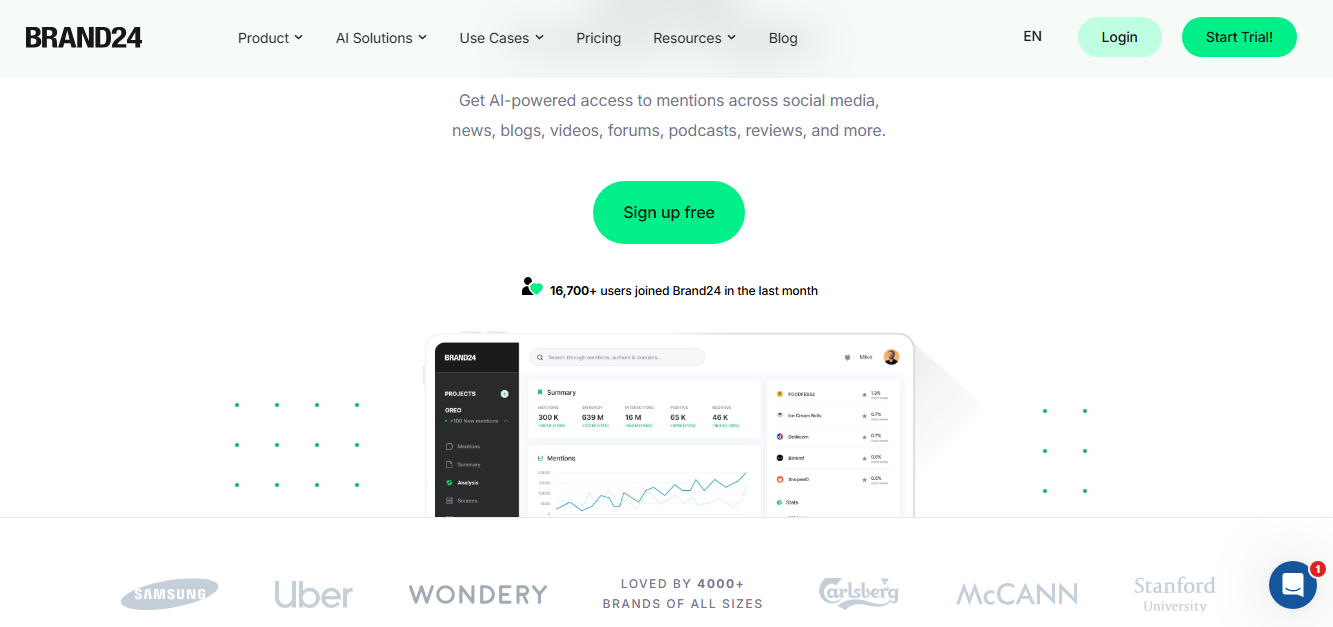
The software monitors mention across the web in real time, assigning an algorithmic sentiment score to identify positive brand advocacy or emerging customer complaints. Contextual topic clouds display common themes associated with your brand and competitors.
Marketing directors configure AI reporting real time analytics via Brand24 to monitor volume spikes, analyze audience reach, and address reputation issues before they escalate.
Best Features:
Real-time web and social listening
Automated sentiment tracking
Volume spike anomaly alerts
Competitor share-of-voice reporting
Pros:
Discovers unlinked brand mentions across public forums
Provides clean executive reporting dashboards for stakeholders
Tracks influencer discussions relevant to target industries
Cons:
Requires configuring strict exclusion filters to prevent common brand names from pulling unrelated conversational chatter
Historical data retention periods are limited on entry-level plans
User Rating: 4.7/5 on Capterra
Pricing: 14-day free trial available; paid subscriptions start at $199 per month billed annually
8. Clay (Data Enrichment & Outbound Pipeline Automation)
Traditional B2B outbound prospecting relies on static lead lists that become outdated quickly, resulting in high email bounce rates and low reply numbers. Clay combines more than 150 data enrichment vendors into an automated spreadsheet environment.
The system uses waterfall enrichment logic, checking one data provider after another until it finds verified email addresses, mobile numbers, and company attributes. Integrated AI research agents visit corporate websites to summarize hiring trends, recent news, and product lines.
Teams implementing AI automation services deploy Clay to build hyper-targeted account lists and draft personalized outbound messages, accelerating pipeline production without manual administrative burdens.
Best Features:
Waterfall enrichment querying 150+ data providers
Integrated AI research agents
Real-time contact validation
Direct CRM synchronization
Pros:
Replaces multiple separate data provider subscriptions
Produces verified, highly targeted contact lists for outbound teams
Automates customized cold outreach drafting based on live prospect data
Cons:
Advanced logic formulas and webhook setups require dedicated technical onboarding time
Credit consumption accelerates rapidly when running multi-provider waterfall checks
User Rating: 4.6/5 on G2
Pricing: Free plan available; paid plans start at $167 per month, billed annually.
9. Alli AI (Automated On-Page Search Optimization)
Technical search optimizations often languish in engineering backlogs for months, causing brands to lose organic traffic during long waits for developers to edit title tags, internal links, and page schema. Alli AI solves this operational delay by allowing search specialists to deploy technical website changes across thousands of pages instantly.
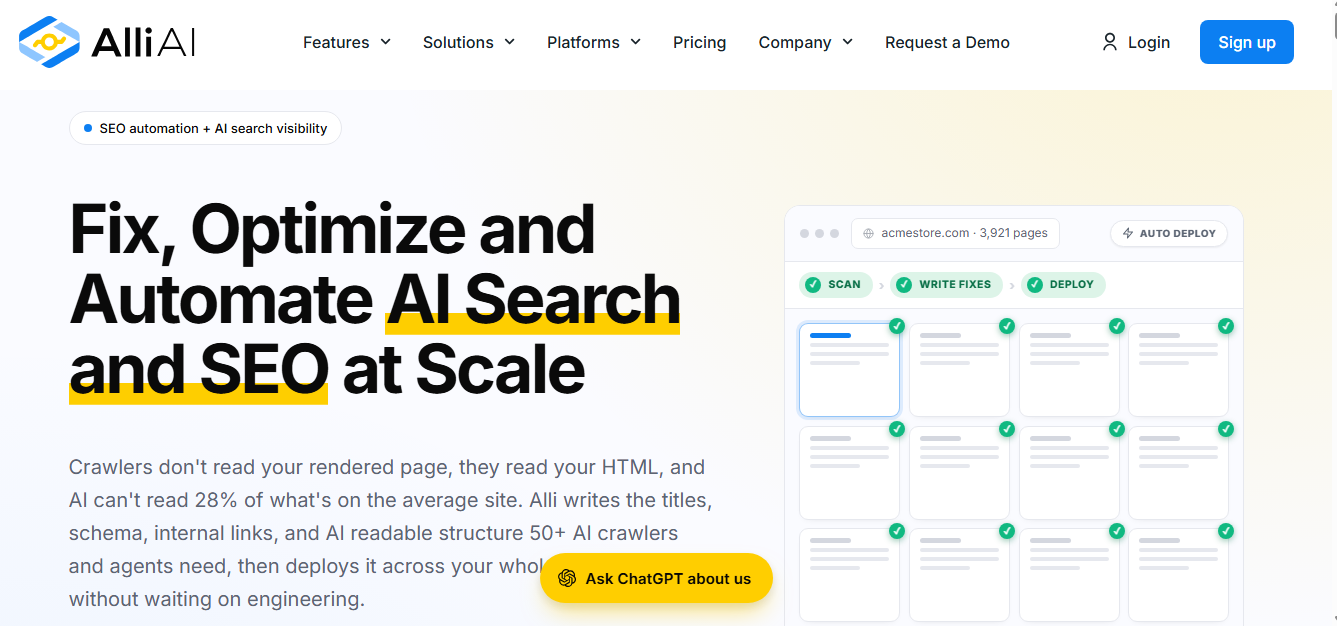
Installing a single JavaScript code snippet gives marketing teams a live front-end page editor to generate optimized metadata, fix broken link paths, and implement schema markups sitewide. The platform continuously audits web pages and suggests automated modifications that align with ranking best practices.
Growth teams preparing for AI search optimization 2026 deploy Alli AI to execute structural search updates in minutes rather than quarters.
Best Features:
Live front-end page editor
Automated sitewide metadata generation
Automated internal link deployment
Live schema markup injection
Pros:
Eliminates developer dependencies for search optimization
Implements structural site updates across thousands of URLs simultaneously
Provides full control to approve or edit automated suggestions before deployment
Cons:
High entry price point makes it unsuitable for early-stage personal blogs
Full implementation relies on client-side JavaScript rendering
User Rating: 4.1/5 on Capterra
Pricing: 10-day free trial available; paid subscriptions start at $299 per month
Comprehensive Comparison of Specialized AI Marketing Software
The matrix below compares the key operational capabilities, user ratings, and verified pricing structures across all nine platforms.
Tool Name | Key Operational Function | User Rating | Pricing & Access |
Anyword | Predictive performance scoring on copy variations | 4.8/5 (Capterra) | 7-day free trial; starts at $39/month |
InLinks | Automated entity schema and internal linking | 4.9/5 (Capterra) | Free tier (20 pages); starts at $49/month |
Madgicx | Full-funnel budget shifting and ad fatigue detection | 4.3/5 (Capterra) | 7-day free trial; starts at $99/month |
Seventh Sense | Contact-level inbox send-time optimization | 5.0/5 (Capterra) | Free trial; starts at $80/month |
VWO | Behavioral targeting and Bayesian A/B testing | 4.5/5 (Capterra) | Free options and trials; paid plans vary by usage |
OpusClip | Hook extraction and portrait video formatting | 4.6/5 (G2) | Free plan (60 min/month); starts at $9/month |
Brand24 | Real-time sentiment tracking and anomaly alerts | 4.7/5 (Capterra) | 14-day free trial; starts at $199/month |
Clay | Waterfall enrichment across 50+ data sources | 4.6/5 (G2) | Free plan (100 credits); starts at $149/month |
Alli AI | Client-side sitewide on-page updates via JS | 4.1/5 (Capterra) | 10-day free trial; starts at $299/month |
How to Implement AI Tools for Business Growth: Step-by-Step
Deploying AI-powered marketing tools is the systematic process of embedding specialized software into commercial workflows to automate repetitive tasks, identify high-intent buyer interest, and accelerate revenue conversion.
Step 1: Isolate Core Production Bottlenecks
Audit internal workflows across marketing divisions. Identify where operations slow down, whether in manual prospect enrichment, technical schema updates, or paid creative production. Select software that targets one acute friction point.
Step 2: Establish Clean Internal Data Repositories
Machine learning systems require organized source data. Verify that CRM fields are clean, update brand guidelines, and review historical campaign records prior to connecting algorithmic software.
Step 3: Connect Tools via Native Integrations
Avoid fragmented software stacks. Choose platforms that transmit information directly into central customer platforms through established APIs, preventing disconnected data islands.
Step 4: Mandate Human Editorial Verification
Assign experienced team leaders to audit software outputs before public release. Check for accuracy, tone, and brand positioning, measuring customer response rates to validate ongoing software return on investment.
Strategic Outlook: Building an Integrated AI Marketing System
Sustainable commercial expansion requires shifting from chaotic manual chores to synchronized software pipelines. Point solutions that generate isolated paragraphs do not build enterprise value. Long-term commercial market leaders configure dedicated platforms across each discipline, linking copywriting scoring, semantic search engines, automated ad optimizers, and outbound data enrichment into a unified revenue engine.
Organizations that combine practitioner-grade tools with disciplined human oversight secure lasting economic dividends. By auditing internal operational friction, cleaning first-party CRM records, and demanding native API integrations, executive decision-makers protect their capital while scaling sales opportunities. Partnering with seasoned growth specialists provides the structural guidance needed to transform software investments into sustainable revenue and verified pipeline velocity.
Loading FAQs
Please wait while we fetch the questions...
Published on September 4, 2026 by Simran