SEO Trends in 2027: Which Strategies Will Survive (and Which Won’t)
Discover what will work in SEO in 2027 and which outdated tactics will lose effectiveness. Explore AI search, technical SEO, original content, brand authority, GEO, multimodal discovery, and the strategies businesses need to build lasting search visibility.
SEO has supposedly been “dying” for more than a decade.
Voice search was going to kill it. Social search was going to kill it. ChatGPT was going to kill it. AI Overviews were going to remove the need for websites altogether.
Yet search is not disappearing.
It is becoming broader.
Google says AI Overviews now reach more than 2.5 billion monthly active users, while AI Mode has crossed one billion monthly users. AI Mode searches are also substantially different from conventional queries: Google reports that the average AI Mode query is roughly three times longer than a traditional search query.
That tells us something important about the future of SEO.
People are not simply typing a keyword, choosing a blue link, and ending the journey.
They are asking detailed questions, comparing options, interacting with AI-generated answers, following sources, switching between text, images and video, and increasingly expecting search systems to help them complete tasks.
So, the biggest SEO trends in 2027 will not be about one algorithm update.
They will be about how search visibility itself is being redefined.
The fundamentals are not disappearing. But several tactics built around exploiting search mechanics rather than genuinely earning visibility are becoming increasingly difficult to justify.
First: SEO Will Still Matter in 2027
Before looking at what changes, it is worth clearing up one misconception.
AI search does not eliminate SEO.
Google's own 2026 guidance says foundational SEO practices remain the basis for appearing both in conventional results and its generative AI features. Pages still need to be discoverable, crawlable, understandable, and useful. Google has also explicitly said that businesses do not need special “AI SEO” markup or a different writing format simply to appear in AI Mode or AI Overviews.
What changes is what marketers expect SEO to accomplish.
Historically, success often looked like:
Keyword → Ranking → Click → Website
In 2027, the journey can look more like:
Question → AI answer → Citation → Follow-up question → Brand comparison → Website → Action
Or it may involve no immediate website visit at all.
That means the job of SEO is expanding from generating organic clicks to building search visibility across the entire discovery journey.
A modern SEO and GEO strategy for visibility therefore has to consider classic rankings alongside AI citations, brand mentions, multimodal search, local discovery and emerging agentic experiences.
What Will Work: Strong Technical SEO
AI does not make technical SEO irrelevant.
Quite the opposite.
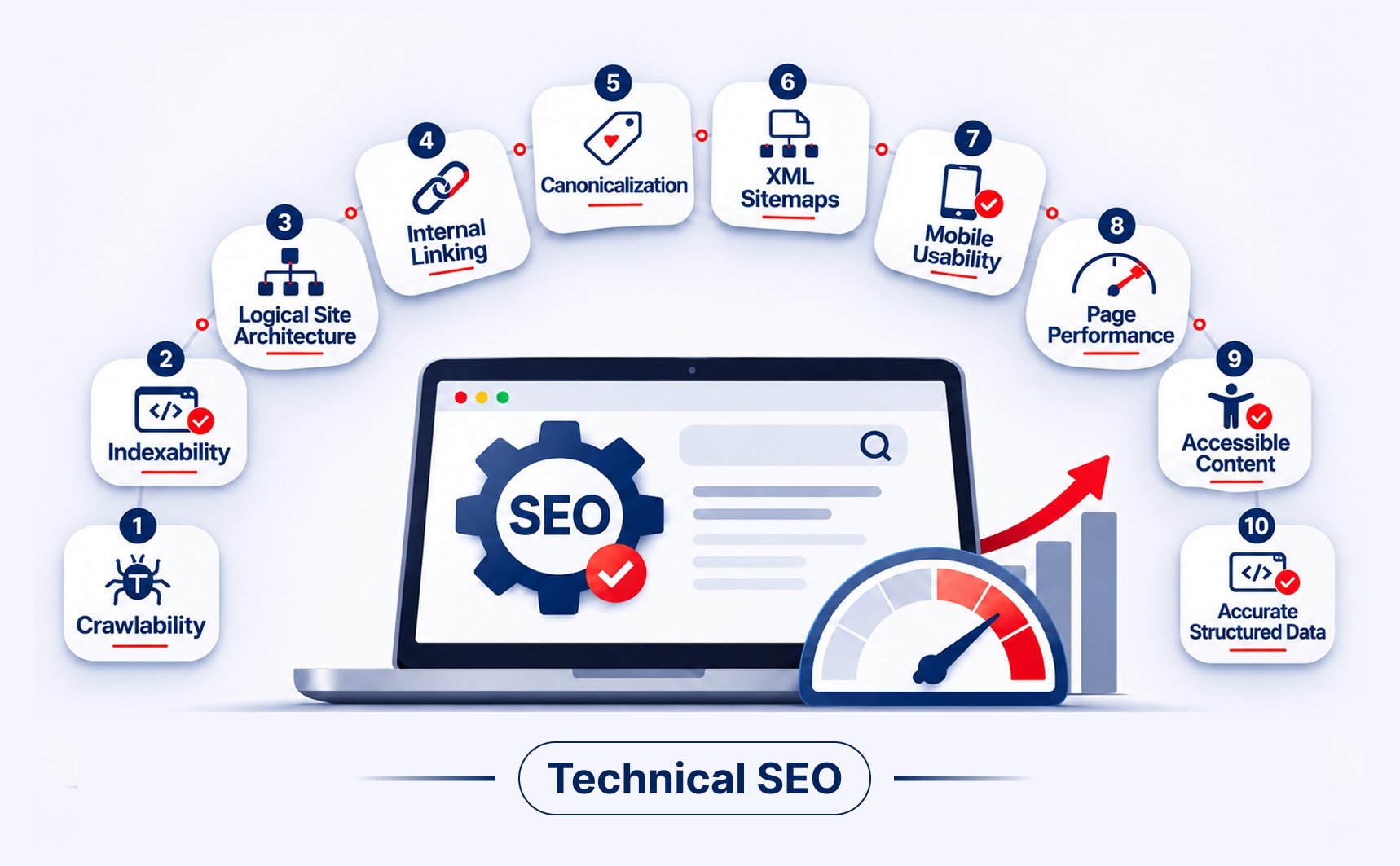
An AI system cannot reliably retrieve content that search engines cannot access, crawl or understand.
Technical fundamentals such as:
crawlability,
indexability,
logical site architecture,
internal linking,
canonicalization,
XML sitemaps,
mobile usability,
page performance,
accessible content,
and accurate structured data
will continue to matter.
Google still lists crawlable links and people-first content among its core Search Essentials. Core Web Vitals also remain part of Google's ranking systems, although Google is clear that perfect performance scores alone will not earn top rankings.
The mistake businesses make is confusing “technical SEO still matters” with “technical SEO alone is enough.”
It is not.
By 2027, technically perfect websites filled with undifferentiated information will still struggle to create meaningful search visibility.
A strong SEO website optimization strategy should therefore treat technical performance as infrastructure rather than the entire growth strategy.
What Won’t Work: Publishing More Content Simply Because AI Makes It Cheap
This will probably be one of the biggest dividing lines in SEO.
Generative AI has reduced the marginal cost of producing content close to zero.
A company can now generate 200 blog posts faster than an editorial team once produced ten.
That does not mean it should.
Google's guidance is increasingly explicit on this point. Its people-first content documentation warns against producing large amounts of content across many subjects simply to capture search traffic. It also identifies extensive automation used primarily to manipulate rankings as problematic. Separately, Google's spam guidance makes clear that scaled AI-generated content without meaningful added value can violate its scaled-content policies.
The important distinction is not:
Human content vs. AI content.
It is:
Valuable content vs. commodity content.
AI can assist with research, structure, editing, data organization, and production.
What will struggle is content that exists merely because a keyword has search volume.
Another generic:
“10 Benefits of Cloud Computing”
article adds little if hundreds of equivalent pages already exist.
An article based on actual migration data, implementation failures, cost benchmarks or lessons from a real cloud transformation is different.
In 2027, publishing velocity without information advantage will become increasingly difficult to defend.
What Will Work: Non-Commodity Content
This may become one of the most important SEO best practices in 2027.
Google now explicitly recommends creating what it calls non-commodity content for generative search.
Its examples emphasize first-hand experience, unique perspectives, original analysis, and information that cannot simply be regenerated from material already available across the web.
For businesses, this means content teams need more access to the organization itself.
The best SEO assets may increasingly come from:
customer interviews,
internal subject-matter experts,
proprietary data,
case studies,
implementation experience,
product usage patterns,
industry benchmarks,
original surveys,
technical documentation,
executive viewpoints,
and lessons from projects that did not go as expected.
That also changes the role of the SEO writer.
The job is no longer simply researching the first ten ranking pages and producing a more comprehensive eleventh version.
The writer increasingly needs to extract information that those ten pages do not have.
That is where a real content strategy starts becoming a competitive search advantage.
What Won’t Work: Keyword Permutations as a Content Strategy
Keywords are not going away. But keyword obsession is.
Search engines have understood semantic relationships for years. AI search makes literal keyword matching even less central because users can ask far more complex questions.
Google has specifically clarified that websites do not need to create content for every variation of a long-tail query simply to accommodate generative search. Its systems can understand synonyms, meaning, and intent.
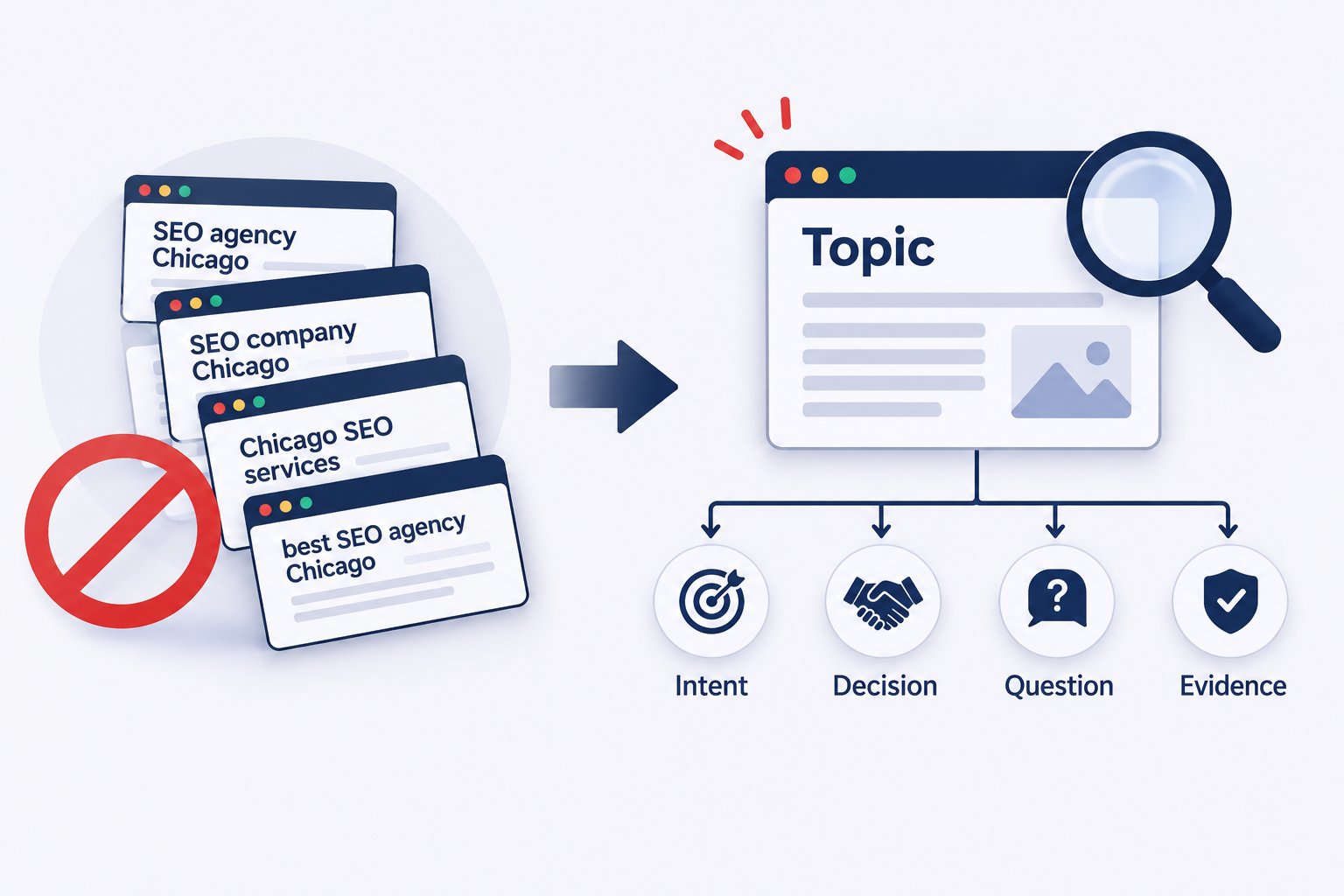
That makes strategies such as creating separate pages for:
“SEO agency Chicago”
“SEO company Chicago”
“Chicago SEO services”
“best SEO agency Chicago”
increasingly difficult to justify when all four pages satisfy essentially the same user need.
A strong keyword strategy will still identify demand. But keywords should inform the content architecture rather than dictate it mechanically.
In 2027, marketers should think increasingly in terms of:
topic → intent → decision → question → evidence
rather than:
keyword → page
What Will Work: Brand and Entity Authority
One of the biggest SEO trends and updates going into 2027 is the increasingly blurred line between SEO and brand building.
Traditional search already considered authority and trust.
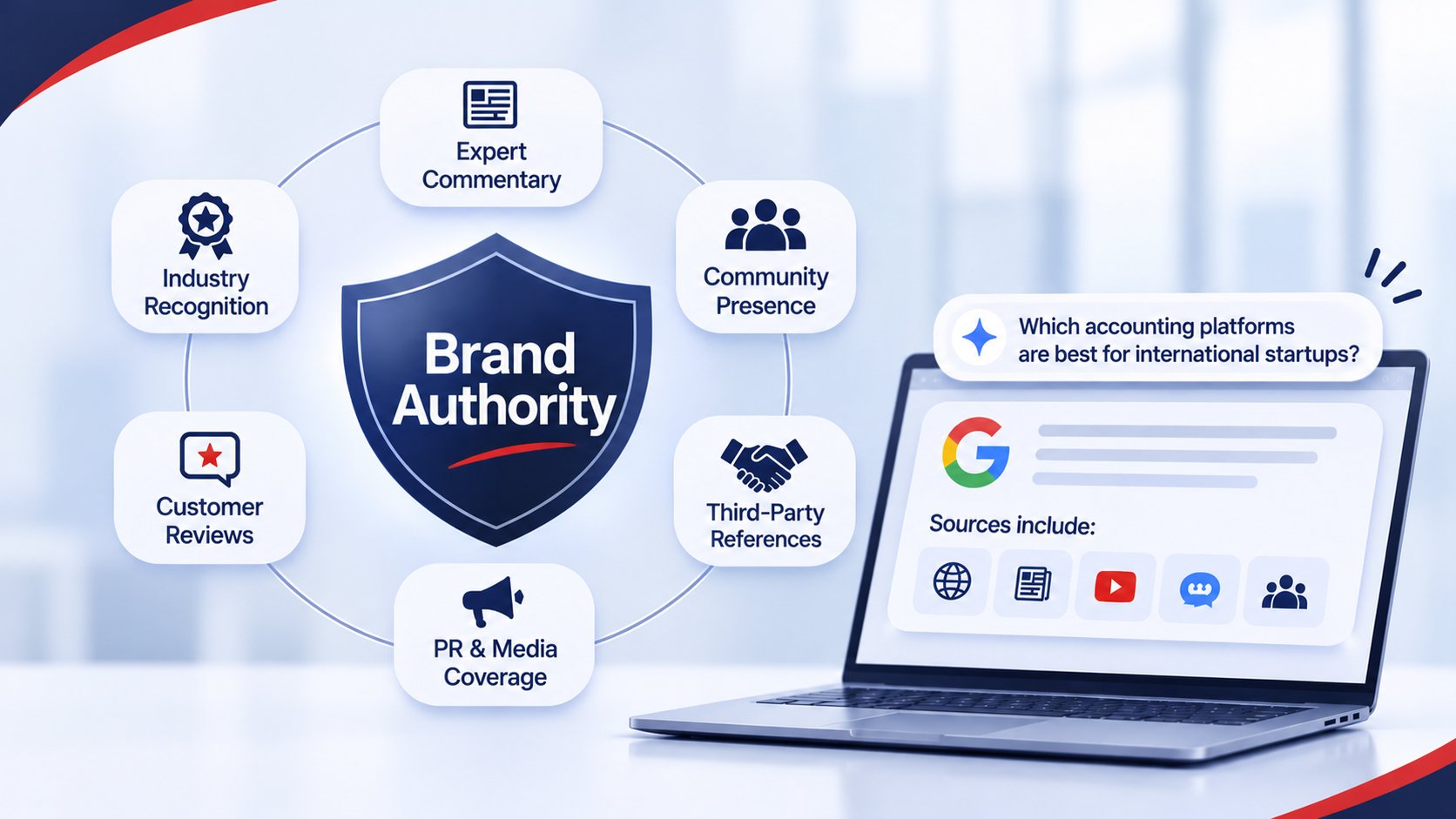
Generative search makes the broader information environment surrounding a company even harder to ignore.
When an AI system needs to answer:
“Which accounting platforms are best for international startups?”
it may retrieve information from company websites, reviews, publications, community discussions, comparison sites and other sources.
That means companies cannot build search authority entirely on their own domains.
Consistent positioning, meaningful third-party references, expert commentary, customer reviews, PR, industry recognition and genuine community presence become part of the search visibility equation.
Google's generative search guidance acknowledges that its AI features can draw on discussion about brands and products from across blogs, forums and video, but also warns that manufacturing artificial mentions will not help in the way some marketers assume.
The implication is straightforward: brand authority cannot be automated into existence. It has to be earned.
What Won’t Work: Link Building for the Sake of Link Building
Backlinks are not becoming meaningless.
Manipulative link acquisition is.
Buying links, excessive reciprocal linking, automated link creation and optimized links embedded in paid guest posts are all explicitly covered by Google's link-spam policies.
The more valuable question in 2027 will be:
Why is another credible website mentioning this brand?
Was there original research worth citing?
A useful tool?
Expert commentary?
A strong customer story?
An industry resource?
A legitimate partnership?
Those links have value beyond PageRank because they also strengthen discovery, referral traffic, reputation and potentially AI retrieval.
SEO teams should increasingly think in terms of earned authority, not backlink quotas.
What Will Work: SEO + GEO + AEO as One Visibility System
There has been enormous debate around whether SEO, AEO, and GEO should be treated as separate disciplines.
In practice, businesses will probably care less about the terminology in 2027.
They will care about whether customers can find them.
Traditional SEO helps pages rank and become discoverable.
Answer Engine Optimization improves the clarity and usefulness of direct answers.
Generative Engine Optimization considers whether the brand and its information can be retrieved, cited, or incorporated into AI-generated responses.
The strongest strategies will overlap.
What Will Work: Multimodal Search
Search is becoming less text dependent.
Google reported in May 2026 that more than one in six U.S. searches used voice or images, while image-search activity was growing rapidly.
This has practical consequences.
Businesses should not treat images and video as decorative additions to written SEO content.
Product imagery, demonstrations, original graphics, charts, video explainers, transcripts, descriptive metadata, and visual search optimization can increasingly contribute directly to discovery.
For ecommerce, travel, food, fashion, local services and visually complex products, this becomes particularly important.
In 2027, “content” will increasingly mean an information asset that can be understood across multiple formats.
What Will Work: Local SEO
AI does not make proximity irrelevant.
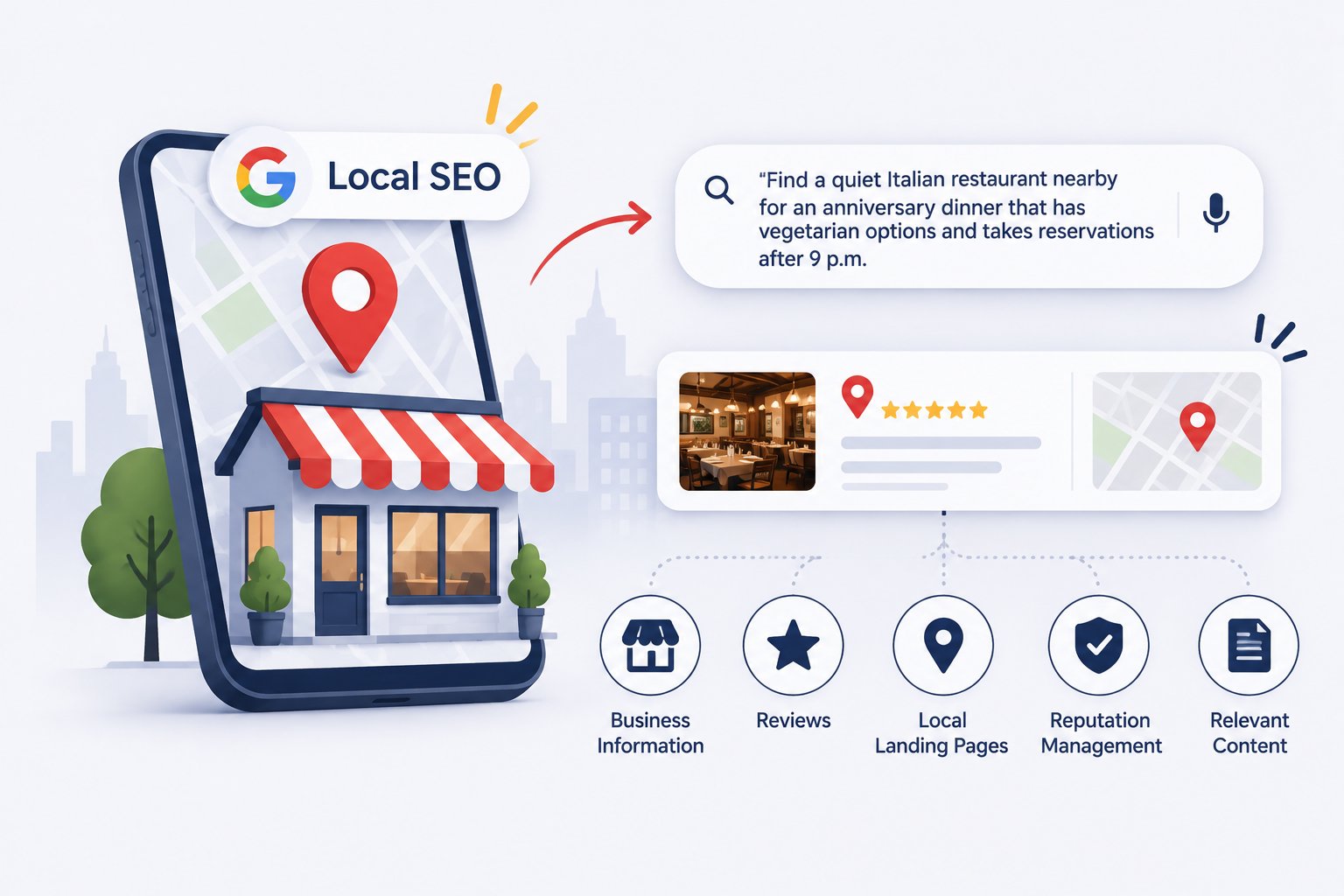
Someone looking for a dentist, restaurant, lawyer, plumber, or salon still needs an answer connected to a real geographic location.
Accurate business information, reviews, local landing pages, Google Business Profile optimization, reputation management and locally relevant content will therefore remain extremely important.
What changes is the interface through which that information may be surfaced.
A customer might no longer search only:
“best Italian restaurant near me.”
They might ask:
“Find a quiet Italian restaurant nearby for an anniversary dinner that has vegetarian options and takes reservations after 9 p.m.”
Search engines can increasingly combine location, business attributes, reviews, and conversational context before presenting the shortlist.
That makes strong local data and clear business information even more important, not less.
What Will Work: Preparing Websites for AI Agents
This may be the biggest emerging SEO development to watch in 2027.
Search is starting to move from finding information toward taking action.
Google's 2026 Search announcements included agentic capabilities for tasks such as bookings and local services. Its Search guidance now also encourages businesses to stay aware of agent-friendly website practices and emerging protocols that allow search agents to interact with websites.
That creates a new question for technical teams:
Can an AI agent actually do something with your website?
Can it understand availability?
Retrieve pricing?
Complete a booking?
Select a product?
Submit a request?
Navigate the checkout process?
In other words, SEO may gradually expand from optimizing websites for crawlers and humans to optimizing them for software acting on behalf of humans.
That shift is still early, but it deserves attention now.
What Won’t Work: Measuring SEO Only by Traffic
This is perhaps the most important mindset shift.
For years, more organic traffic was treated almost automatically as better SEO.
In 2027, that assumption will become increasingly unreliable.
An informational page may receive fewer clicks because an AI Overview answers the basic question directly. But the same site might gain greater brand exposure, more citations and fewer but more commercially qualified visitors.
The correct question therefore becomes:
Did search visibility contribute to business growth?
Not simply:
Did organic sessions increase?
Businesses should connect SEO reporting with qualified leads, sales, pipeline, assisted conversions, brand demand and overall content marketing ROI.
The SEO Strategy That Will Survive 2027
Strip away the terminology and the best SEO Strategies for 2027 are remarkably logical.
Make the site easy for search systems to access.
Build pages around actual customer needs.
Create information competitors cannot easily replicate.
Develop genuine expertise.
Earn market authority.
Use keywords to understand demand without allowing them to dictate every sentence.
Make business information clear and consistent.
Optimize for multiple search formats.
Measure AI visibility as well as conventional rankings.
And make sure the website ultimately helps the customer complete the task that brought them there.
At MMB, this is why we increasingly view organic visibility solutions as broader than conventional SEO rankings alone. Search visibility now spans traditional results, generative answers, local discovery, citations and emerging agent-led journeys.
The future of SEO is not “no SEO.”
It is SEO without many of the shortcuts marketers became accustomed to.
Search engines are becoming considerably better at understanding what users mean, retrieving information from multiple formats, evaluating sources and synthesizing answers.
That raises the standard.
The companies that succeed in 2027 will not necessarily be those producing the most pages, repeating the most keywords or acquiring the largest number of links.
They will be the ones creating the strongest reason to be found.
Loading FAQs
Please wait while we fetch the questions...
Published on November 17, 2026 by Surbhi Sood