Ecommerce PPC: 5 Takeaways That Shape How Campaigns Will Perform In 2027
Discover 5 key Ecommerce PPC takeaways shaping campaign performance in 2027. Explore AI-powered bidding, product feed optimization, profit-focused advertising, agentic commerce, and multi-channel strategies to build more profitable campaigns and drive high-intent traffic.
Most ad accounts bleed cash. Ad dashboards flaunt impressive conversion figures, yet merchant bank accounts tell an entirely different, sober story every single month. Vanity metrics hide rot.
Auction prices keep climbing, customer tracking fails repeatedly, and faulty catalog feeds choke store sales before buyers reach checkout pages.
What Is Ecommerce PPC and How Does It Increase Website Traffic Profitably?
Ecommerce PPC is an online advertising model where stores pay search engines or social platforms each time a shopper clicks an ad. Most campaigns span Google Search, Shopping, Performance Max, and catalog formats built to send buyers straight to product pages. Every click drains cash immediately.
Here is the trap store owners hit when figuring out how to increase website traffic. Cheap clicks inflate analytics charts without clearing warehouse shelves. Auction competition keeps heating up.
Figures from the U.S. Census Bureau show Q2 2026 U.S. e-commerce sales rose 12.2 percent year-over-year, nearly twice the 6.7 percent retail average.
Crowded auctions punish sloppy bidding fast. A disciplined Ecommerce PPC Strategy targets buyer intent and real SKU margin ahead of empty traffic.
5 Takeaways That Shape How Ecommerce PPC Campaigns Will Perform in 2027
Current Ecommerce trends and PPC Trends 2027 point to one plain lesson. Automated bidding cannot salvage weak inputs. Five operational shifts separate profitable accounts from stores quietly bleeding cash.
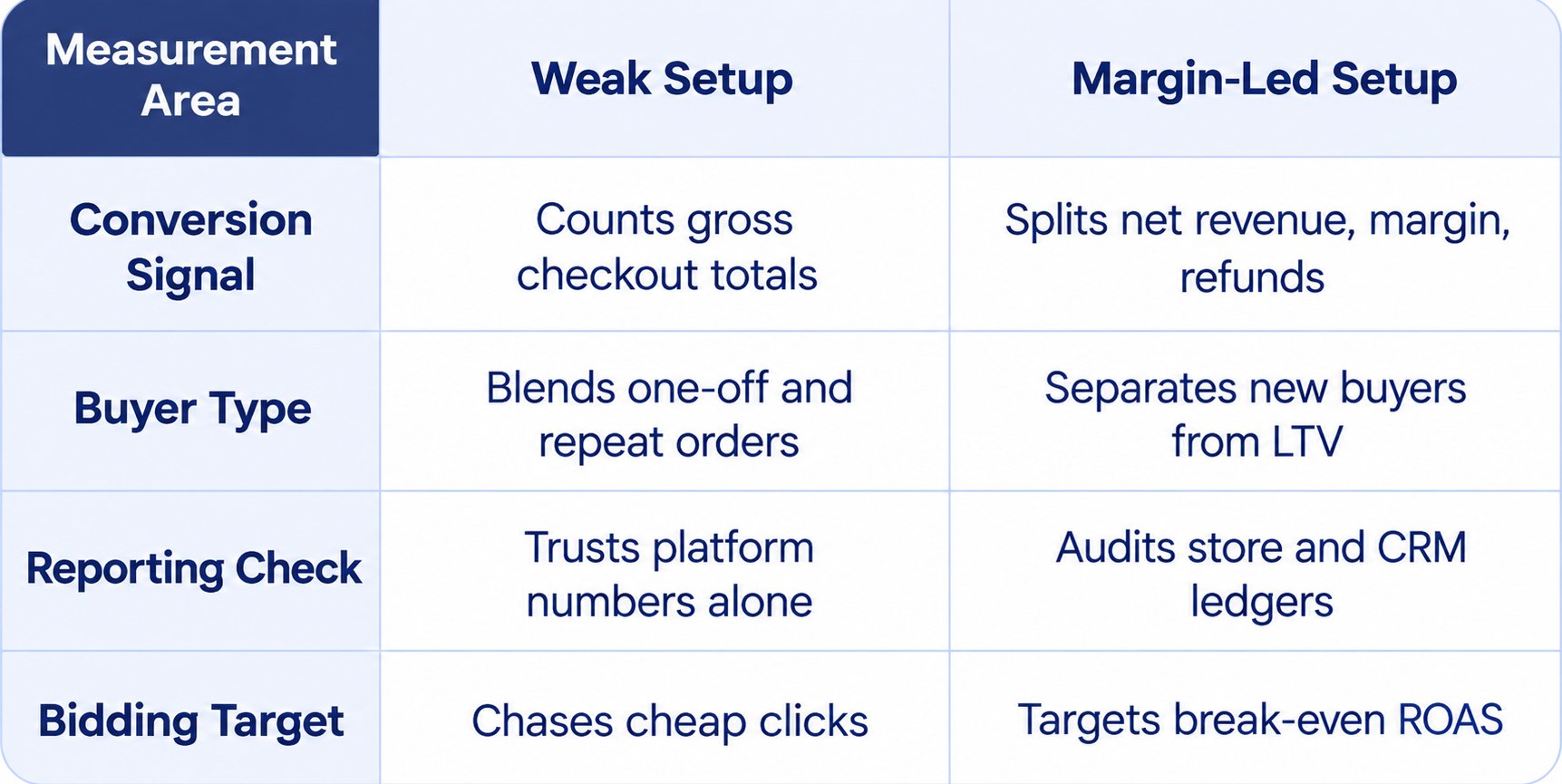
1. Why Must Campaigns Measure Net Margin Instead of Clicks and Raw ROAS?
Dashboards love displaying a neat 4x Return on Ad Spend. Then your bookkeeper checks the bank statement and asks where the profit went.
That gap appears when automated bidding chases gross checkout counts blindly. Paid search audits note Google pushes budget-capped campaigns straight to your target CPA or ROAS rather than beating it. Treating every purchase identically masks refunds, shipping costs, steep discounts, and thin-margin items.
Clean up tracking before raising spend. Moving to AI performance marketing built on server-side tagging, GA4 backups, and first-party store records cuts browser and cookie blind spots. Skip that foundation, and shopping accounts mirror campaigns stuck on Google Ads clicks with no leads.
Smart teams judge campaigns by break-even ROAS, customer lifetime value (LTV), and Marketing Efficiency Ratio instead.
2. How Much Control Should You Give AI Automation in Google Ads for Ecommerce?
Hands-off automation runs smoothly until nobody watches the spend. Default machine settings often route budgets into loose queries and weak placements.
Effective performance driven marketing combines automated bidding with human oversight to keep campaign spending aligned with business margins.
Be skeptical when reps claim algorithms know margins better than your ledger. Google Ads for Ecommerce still needs hard boundaries. Running exact and phrase match next to automated tests keeps core commercial terms protected and query reports visible.
Comparing Traditional Search, Google Ads AI Max, and Performance Max keeps campaigns from competing internally.
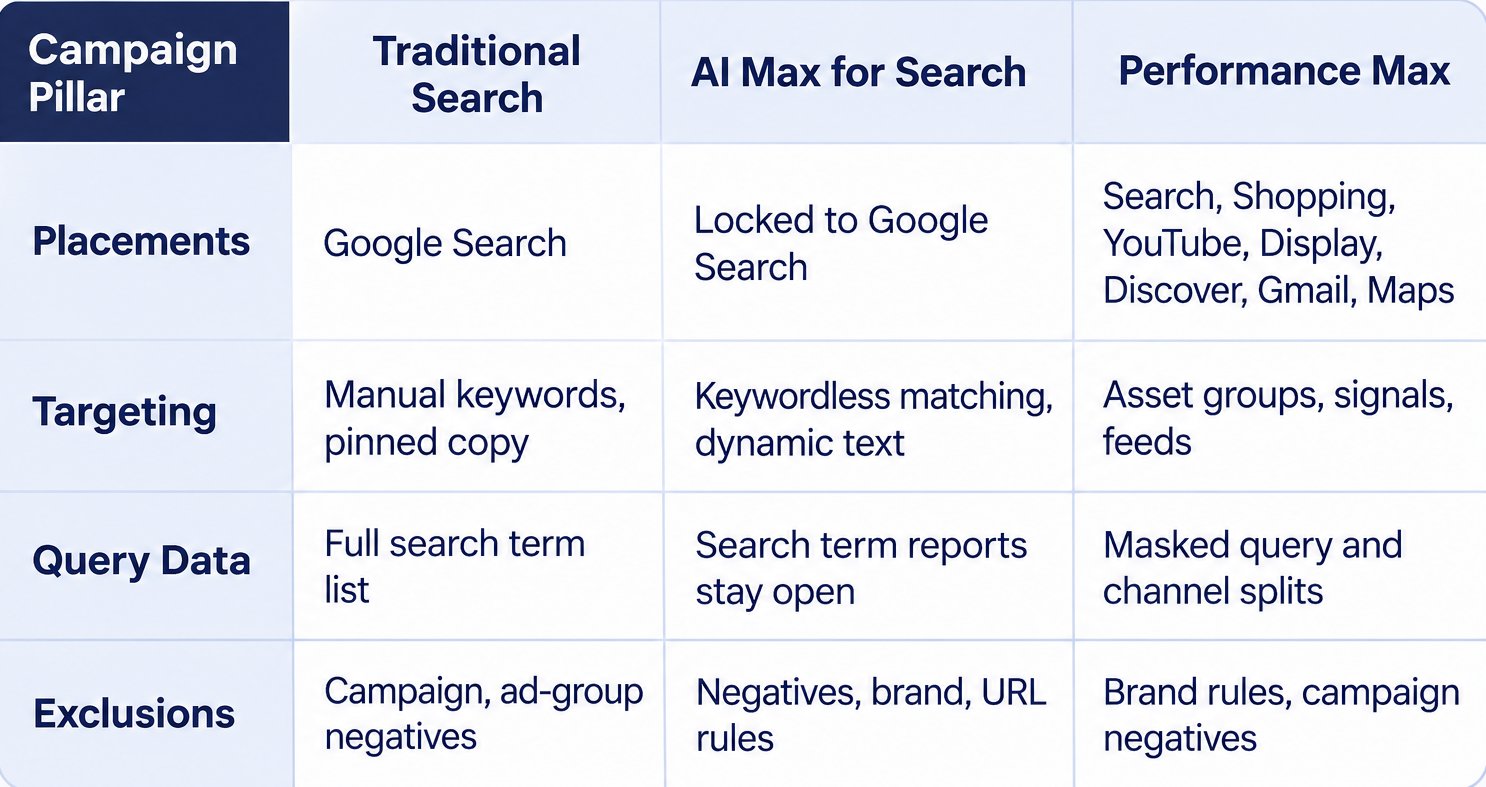
Notice the practical trade-off. Performance Max added campaign-level negative keywords, yet channel spend splits remain hidden. Pair AI Max tests with strict PMax exclusions, and inspect default AI toggles before funding new campaigns.
3. Why Does Product Feed Optimization Outperform Ad Copy Tweaks?
Here is an unvarnished truth about Google Ads for Ecommerce. You can write clever text ad headlines until your fingers hurt, but a broken Merchant Center feed kills your account before auctions start.
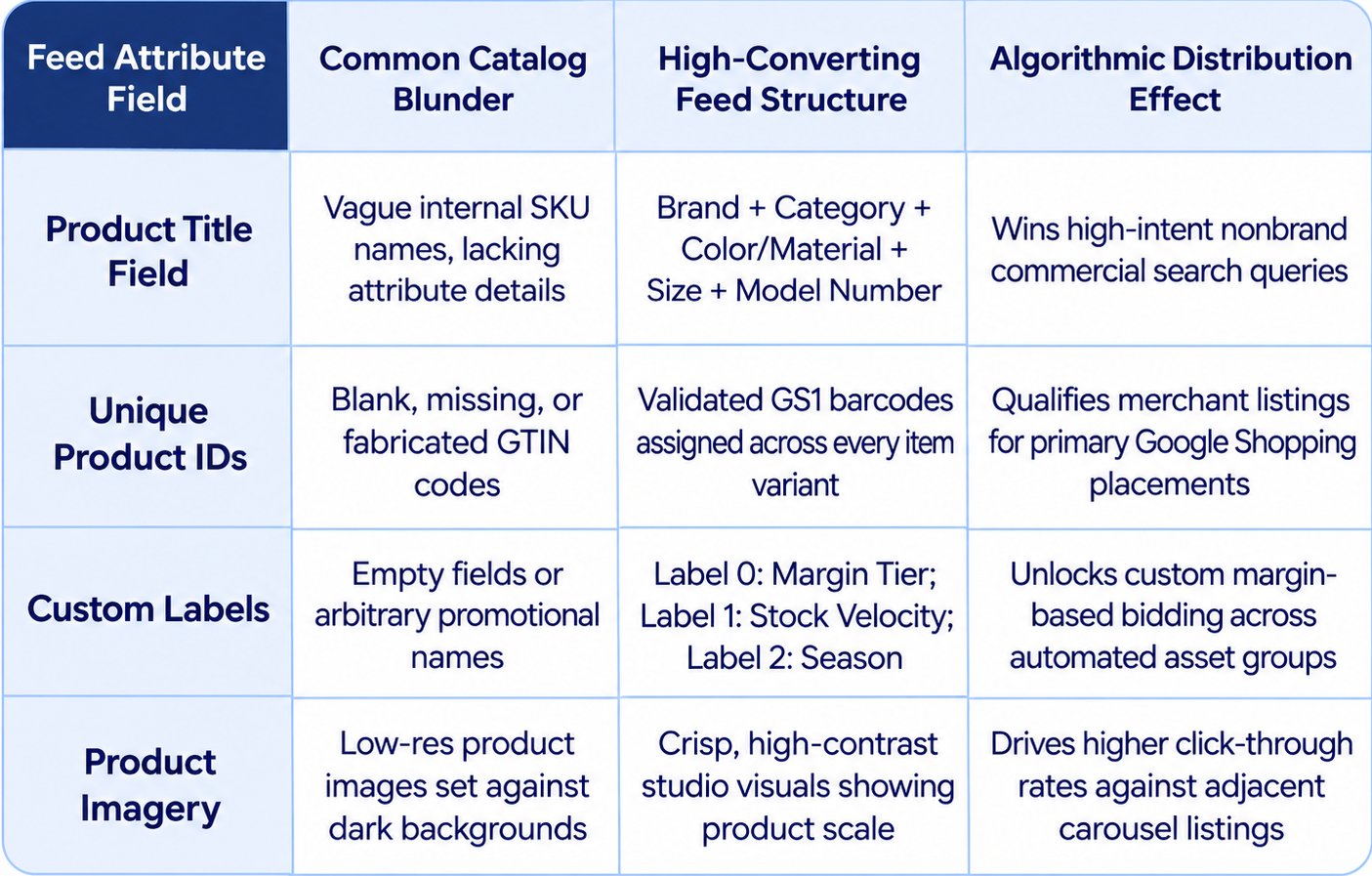
Shopping formats and Performance Max campaigns build ads straight from product data feeds. Algorithms crawl product attributes to decide when and where your products appear in front of shoppers. Missing GTIN barcodes, generic product descriptions, or broken inventory counts throttle reach automatically.
Treat your product feed like your chief creative asset. High-performing retailers structure product titles deliberately. Put the brand name first. Follow that with the exact product type, color, material, sizing, and manufacturer part number. This format gives matching algorithms the semantic context required to win high-intent commercial searches.
Group your products by what matters to your business: profit margin, stock levels, and past sales. Use custom labels to do it.
Pull thin-margin or hard-to-stock items out of broad automated bidding campaigns. Put your biggest budgets behind high-margin products that ship fast and get reordered often.
4. How Are Agentic Commerce and AI Answers Reshaping Ecommerce Advertising?
Shoppers are breaking away from standard search result lists. They ask conversational tools to compare products, summarize buyer opinions, and select the best product for their exact needs. Discovery happens upstream.
The economic scale of this shift is staggering. Investment projections from Morgan Stanley suggest autonomous shopping agents could influence $385 billion in domestic retail sales by 2030. Shoppers delegate product comparisons and checkout tasks to artificial intelligence assistants.
Search visibility is spreading across fragmented spaces. Organic click-through rates decline when conversational summaries answer shopper questions directly inside search boxes. By the time an individual clicks a link to your store, much of their buying decision was already formed. Traffic counts drop, yet purchase intent becomes far more concentrated.
To survive this shift, you’ll need AI performance marketing built around Generative Engine Optimization. AI agents decide which products to recommend by reading your structured schema markup, technical specs, and verified customer reviews. Aligning with an AI-powered marketing partner prepares your digital catalog to surface inside conversational comparison engines alongside paid ad placements.
5. Why Does Distributed Discovery Beat Single-Channel Ad Buying?
Most buyers never convert on click one. Someone watches a creator demo, scans reviews, queries an AI tool, and searches your brand days later.
Video and creator posts build real upstream demand. A Forbes Councils post reports U.S. livestream ecommerce sales climbed nearly 50 percent in 2025 to $14.64 billion. Dynamic Creative Optimization pipes live stock and pricing into social templates without manual rebuilds.
Single-channel dashboards hide how those touches assist orders. Weighing Meta Ads vs. Google Ads makes the split clear: social creates demand, and Search captures it once people are actively looking. Automated replenishment emails boost repeat sales, and an experienced AI marketing partner can tie your signals together across channels.
Before you cut social spend, check your assisted conversions. Social often feeds your branded search.
How to Increase Website Traffic with Ecommerce PPC
More traffic is only worth having if it makes you money. That means matching ads to what people are searching for, keeping your product data clean, fixing the places where shoppers drop off, and bidding based on profit instead of cheap clicks. Here’s where to start:
Check your tracking and account ownership. Make sure you own your Google Ads and Merchant Center accounts, not an agency or a former freelancer. Count only completed purchases as your main conversion.
Rework your product titles and photos. Lead with brand, product type, material, and size. Add barcodes (GTINs) and use bright photos that show the product in use.
Fix your store pages before spending more. Speed up mobile load times and show shipping costs early. A better conversion rate makes every ad dollar go further.
Split campaigns by profit margin. Keep Brand, Non-Brand, Shopping, and Performance Max separate, use margin labels, and add negative keywords every week.
Connect your email flows. Set up cart-abandonment and repeat-purchase emails using your own customer data. This lowers what each customer costs you over time.
A Practical 5-Step Plan for Growing Store Traffic
Profitable traffic takes steady, unglamorous work. Here’s the roadmap for growing without burning through your cash.
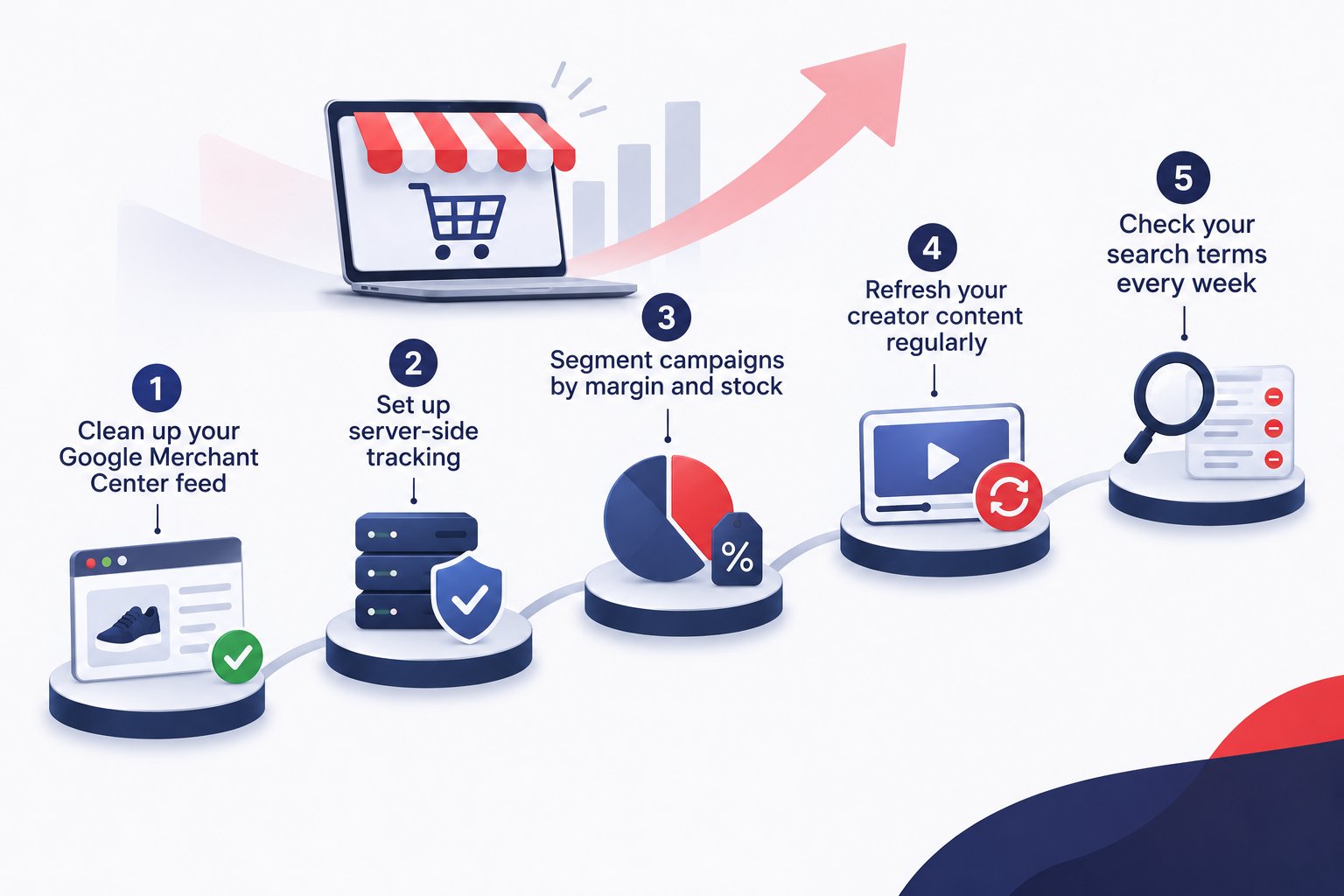
Step 1: Clean up your Google Merchant Center feed
Go through your catalog and fix any rejected or mismatched attributes. Then rewrite your titles so the brand, product type, material, and size all appear up front. A clean feed makes your products eligible to show in more Shopping placements.
Step 2: Set up server-side tracking
Browser cookies are less reliable than they used to be, especially on mobile. Send your confirmed checkout data straight to your ad platforms from your server. If you can also pass back real profit per order, the bidding system learns which buyers are worth chasing.
Step 3: Segment campaigns by margin and stock
Don’t lump the whole catalog into one automated campaign. Group products by contribution margin and what’s actually on your shelves. Put most of your budget behind high-margin items and cap spending on clearance stock.
Step 4: Refresh your creator content regularly
Ads wear out. Add new creator demos, problem-solving videos, and short vertical clips on a regular schedule, roughly every few weeks. Real-looking content from actual users tends to bring down acquisition costs and lift click-through rates on discovery placements.
Step 5: Check your search terms every week
Automated matching will show your ads for queries that have nothing to do with what you sell. Every Monday, open your search term report, find the searches that spent money without converting, and add them as negatives.
Put Profit First in Your 2027 Paid Media Plan
Ad networks will keep automating buttons, hiding search queries, and claiming credit for sales you already earned. Let machine bidding handle the auction math; just stay strict about the numbers going into your account. Clean your feeds, patch mobile checkout leaks, track SKU margins, and test new AI channels with clear holdout rules.
Ready to stop guessing where your ad budget goes? Reach out to Make My Brand to audit your tracking, rebuild your Shopping feeds, and turn paid search into steady, measurable profit.
Loading FAQs
Please wait while we fetch the questions...
Published on November 23, 2026 by Surbhi Sood